Next.js security release lands August 26. Prep now
By Nihar Ranjan Das · Fri Aug 21 2026 · 6 min read · 3 views
View as a Web StorySoftware#security#next.js#vercel#react#web development
Next.js security release lands August 26. Prep now
Vercel has told everyone that a critical bug exists in Next.js, and has not yet said what it is. The Next.js security release lands on August 26, 2026. It fixes one critical-severity vulnerability, and it ships as version 16.3.3 and version 15.5.24.
That gap between the warning and the patch is deliberate. It is also the most useful window a team gets. The advisory arrives with the fix, so August 26 is the day everyone starts reading. The work that makes that day cheap can be done in the five days before it.
What Vercel actually announced
Next.js is a React framework maintained by Vercel for server-rendered and statically generated web applications. Vercel announced a scheduled security release for August 26, 2026, covering exactly one critical-severity vulnerability, in a pre-announcement post on the Next.js blog.
Four facts are public right now.
| Item | What is known |
|---|---|
| Release date | August 26, 2026 |
| Severity | Critical, one issue |
| Patched versions | 16.3.3 and 15.5.24 |
| Advisory contents | Impact, affected versions, upgrade instructions |
Everything else is embargoed. There is no CVE number, no named component and no proof of concept. Vercel's security release program explains the trade: announcing the date lets teams book the window, while withholding the detail stops attackers working backwards to the bug.
Which versions get the patch, and which do not
Only the 16.3 and 15.5 branches are named. Vercel is publishing 16.3.3 and 15.5.24, and nothing in the announcement promises a backport to 15.4, 15.3, 16.0, 16.1 or 16.2.
This is the part most patch-day coverage will skip. A team running Next.js 16.1 does not have a one-line bump ahead of it. It has a minor-version upgrade first, and then a patch. That is a different amount of work, and it needs review time that August 26 will not provide.
Check the installed version first:
npm ls nextThen find your row:
- On 16.3.x or 15.5.x — a patched branch. August 26 is a single dependency bump.
- On 16.0, 16.1 or 16.2 — move to 16.3 this week, using the version 16 upgrade guide.
- On 15.0 through 15.4 — move to 15.5 this week, or plan the larger jump to 16.
- On 14.x or older — outside the patch window entirely. This release will not reach you.
What to prep before August 26
Do the mechanical work now, so patch day is a merge instead of a project. The methodology is simple: separate the parts that need judgement from the part that needs speed, and finish the judgement early.
Advertisement
- Record the deployed version everywhere. Note the exact
nextversion in production, staging and preview. Environments drift, and the one nobody checks is usually the oldest. - Move onto a patched branch. If you are not on 16.3 or 15.5, upgrade to it under normal review this week, not under time pressure next week.
- Open the bump as a draft pull request now. Set
nextto16.3.3or15.5.24and let CI run. It will fail to install today, because the version does not exist yet. The branch, the reviewers and the checks are what you are pre-building. - Confirm the deploy path. Self-hosted teams need a container rebuild. Teams on Vercel need a redeploy, not only a dependency change in the repository.
- Name the owner for the 26th. One person reads the advisory the hour it lands and decides whether the version bump alone closes the issue.
Does a critical rating mean you are being exploited?
No. A critical rating describes the potential impact of the bug. It is not evidence that anyone is using it, and Vercel's announcement makes no claim of exploitation in the wild.
The rating still sets the schedule. Critical severity in a framework that sits at the network edge usually implies unauthenticated impact, and this ecosystem has recent form. The React Server Components vulnerability disclosed in December 2025 and the July 2026 security release both drove same-week patching across large deployments. Plan for same-week, not same-quarter.
What the advisory will and will not tell you
The August 26 advisory will state the impact, the affected version ranges and the upgrade instructions, which is what Vercel committed to publishing alongside the release. It will not tell you whether your own application was reachable.
That check is yours, and it is faster if you do the indexing now. When the advisory names an affected component — middleware, image optimization, the router, or server actions, for example — you will want an immediate answer on whether your codebase touches it.
Grep for the four usual suspects this week and keep the output:
rg -l "middleware\.(ts|js)" .
rg -l "next/image" app components
rg -l "use server" app
rg -l "unstable_cache|revalidateTag" .
Should you upgrade now, wait, or ignore it?
Upgrade to a patched branch now, then apply the patch on August 26. That is the answer for essentially every internet-facing deployment.
Ignoring it is defensible in exactly one case: the application is not internet-facing and never handles untrusted input, such as an internal dashboard behind a VPN. Even then, the version drift you accumulate makes the next critical release more expensive, not less.
Waiting for the CVE number is not a strategy. The number explains what the bug was. It does not change which branch you must be on to receive the fix, and that is the only part of this with a deadline.
The build problem that is not a security problem
One issue confuses this window for some teams. A Turbopack build failing in Next.js 16.3 blocks the upgrade path, and a blocked upgrade path means the security patch cannot land. That is a build problem, and it has to be cleared first. Fix the build, then queue the security bump behind it.
Runtime drift causes the same jam. Node.js 26 turns Temporal on by default, and stacking a runtime upgrade on top of a framework patch in one sprint is how a two-line change becomes a bad week. Sequence them, and keep the security bump on its own.
Advertisement
FAQ
What versions does the August 26 Next.js security release patch?
Vercel will publish Next.js 16.3.3 and 15.5.24 on August 26, 2026. Both patch a single critical-severity vulnerability. The announcement names no other branches, so releases such as 16.2 or 15.4 should not be assumed to receive a backport.
Is there a CVE number for the August 2026 Next.js vulnerability?
Not yet. Vercel pre-announced the release date and severity without publishing the advisory, which means no CVE identifier, affected component or proof of concept is public before August 26, 2026. The full advisory ships alongside the patched versions.
How do I check which Next.js version my app is running?
Run `npm ls next` in the project root, or `pnpm why next` if you use pnpm. Check every deployed environment separately, including staging and preview, because those often lag production. The installed version determines whether August 26 is a patch or an upgrade.
Do I need to redeploy after upgrading Next.js on Vercel?
Yes. Changing the dependency in the repository is not enough on its own. The patched version reaches users only after a new build and deployment, whether you host on Vercel or run your own containers. Confirm the deploy completed before you call the patch done.
Comments
Loading…
Sign in to join the conversation.
Related posts
PostgreSQL 19 breaking changes to check before upgrading
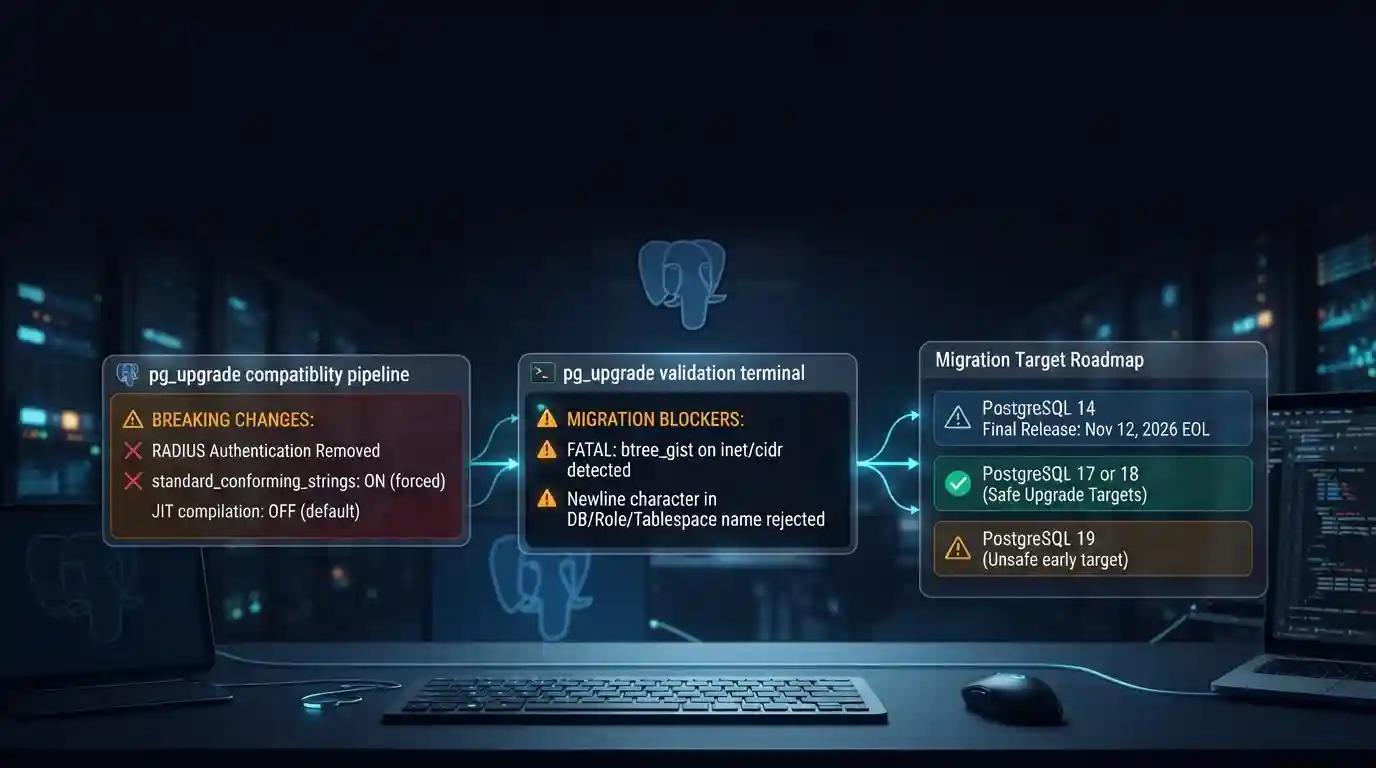
PostgreSQL 19 is not released yet, but its list of breaking changes is already fixed enough to check your cluster against. The PostgreSQL project released Beta 4 on September 24, 2026. It says the
Tue Sep 29 2026 · 6 min read · 7 views
Google Cloud decommissions Node.js 20 on October 30
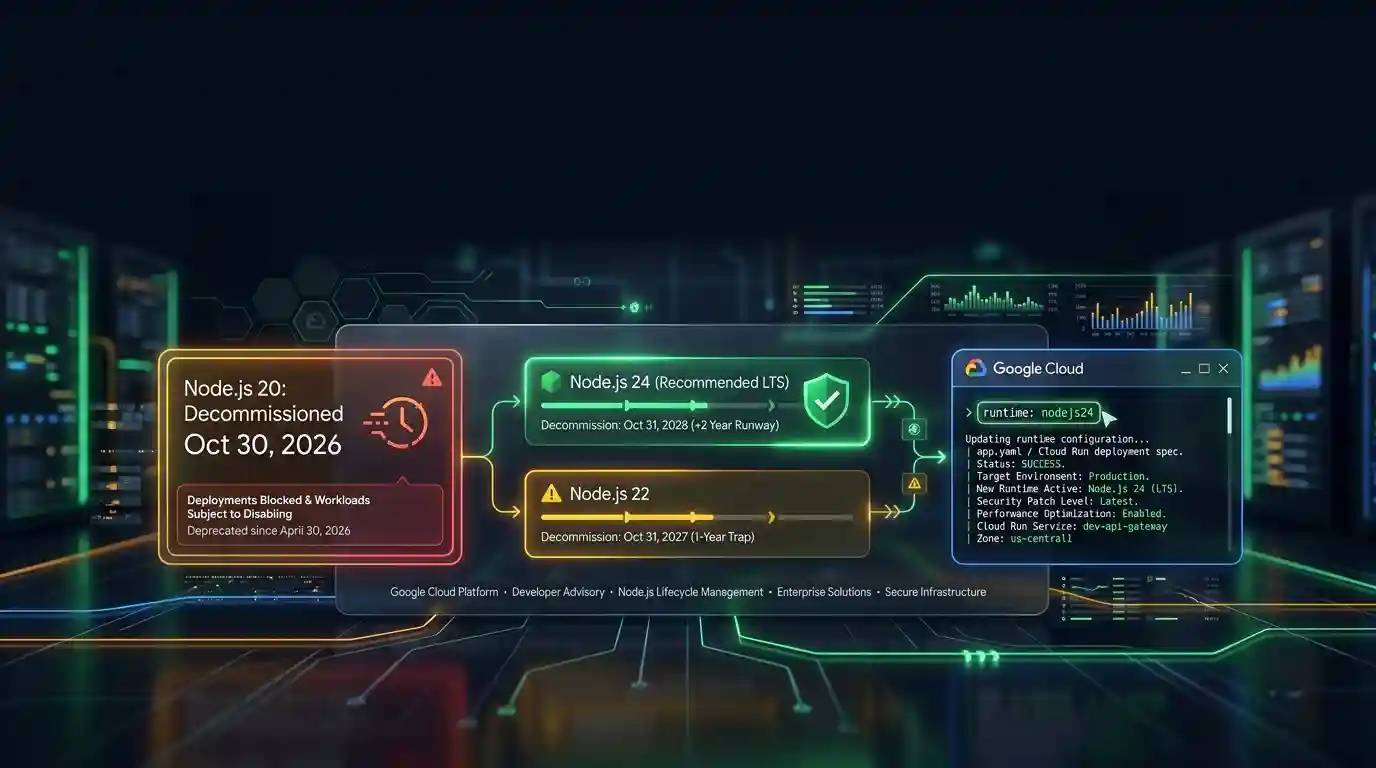
Google Cloud decommissions the Node.js 20 runtime on Cloud Run and Cloud Run functions on October 30, 2026. That is 31 days away. From that day you cannot create or redeploy a workload on it, and
Tue Sep 29 2026 · 6 min read · 6 views
Java 27 is not LTS: should you leave Java 25?
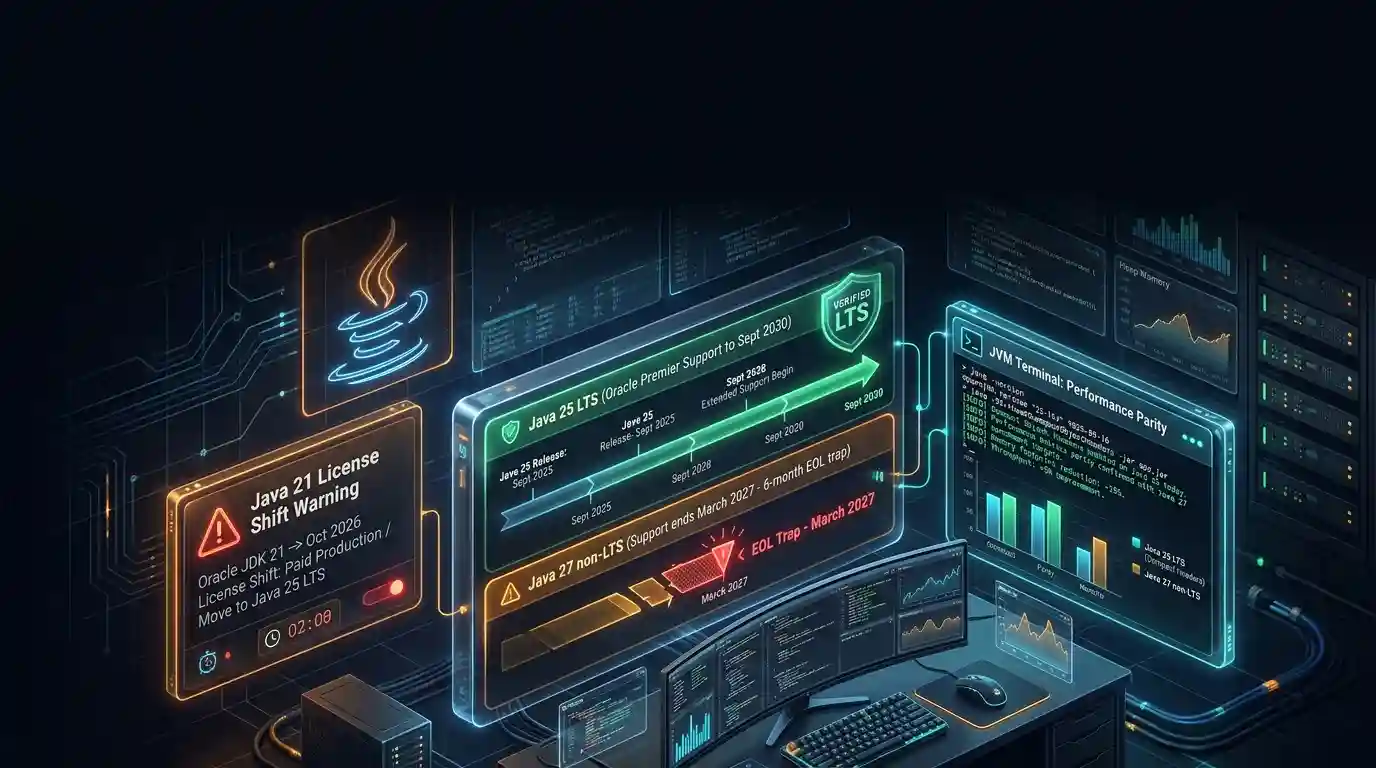
Java 27 shipped on September 15, 2026, and it is not a long-term-support release. Oracle says it will provide updates to JDK 27 until March 2027, when Oracle JDK 28 supersedes it. The next
Tue Sep 29 2026 · 6 min read · 7 views