Qwen 3.8 Max promised open weights. Here is what shipped
By Nihar Ranjan Das · Thu Aug 06 2026 · 7 min read · 12 views · Updated Mon Oct 12 2026
View as a Web StoryAI#qwen#alibaba#open weights#ai models#open source ai#llm
Yes, Alibaba published the Qwen 3.8 weights, and it did so close to the window it promised. The 27B model is on Hugging Face under Apache 2.0. The 2.4-trillion-parameter model is there too, under a custom license with commercial conditions. That answers the question we asked in August. The more useful question now is which of these files you can actually run, and on what terms.
What changed since August
When we first published this post on August 7, a query of Hugging Face's public API showed no official Qwen3.8 repository. We re-ran that check on October 12 and the picture is different:
- The flagship weights are out.
Qwen/Qwen3.8-2.4T-A95Bhas its first upload on August 9, with the model card finished on August 11, according to the repository's commit history. - The 27B is the one people use.
Qwen/Qwen3.8-27Breports about 6.8 million downloads and 17,500 likes, and Hugging Face lists over 500 fine-tunes of it. - The license is named. The 27B is Apache 2.0. The big model uses a custom "Qwen3.8-Max" license, which we read in full below.
- A third model arrived.
Qwen3.8-Flash-Next, a 180-billion-parameter model, appeared on August 24 under a separate community license.
Where are the Qwen 3.8 open weights?
All three are on the official Qwen organization on Hugging Face, and the 27B has an FP8 build as well. These figures come from the Hugging Face API and the model cards on October 12.
| Model | Size | License | Context length | Downloads |
|---|---|---|---|---|
| Qwen3.8-27B | 27.8B dense, vision encoder | Apache 2.0 | 262,144 native, up to 1M | 6.84 million |
| Qwen3.8-2.4T-A95B | 2.446T total, 95B active | Qwen3.8-Max license | 262,144 native, up to 1.01M | 32,520 |
| Qwen3.8-Flash-Next | 180B | Qwen Community License 1.0 | See model card | 1.87 million |
!Timeline from the August 3 Qwen 3.8 Max API launch through the first 2.4T weight upload on August 9, the model card on August 11 and the Flash-Next release on August 24
The download gap is the story. The compact dense model has about 200 times the downloads of the flagship, because almost nobody can load the flagship.
A word on the third model. Flash-Next is tagged with an experimental architecture, qwen4_exp, in its repository metadata, and it accepts image and text input. Alibaba's own blog describes it as a new architecture, so treat it as a preview of where the family is going rather than a drop-in replacement for the 27B. It still reached 1.87 million downloads within seven weeks.
Is the open 2.4T model the same as Qwen 3.8 Max?
Not quite. The model card says Qwen3.8-Max is "the official version based on Qwen3.8-2.4T-A95B with more features." The hosted Max adds vision input, non-thinking mode, a one-million-token context by default and official built-in tools. The open checkpoint has a native 262,144-token context that you can extend to 1.01 million tokens.
So the open file is the same base model, not the product you call over the API. That matters if you compare benchmark scores. The published tables describe Max, and Alibaba's footnotes say the vendor ran many tests itself with the Claude Code harness. Treat them as vendor results until a third party reproduces them.
The architecture is a mixture of experts, a design where a router sends each token to a few specialist sub-networks. The 2.4T model has 512 experts and activates 10 routed experts plus one shared expert, which is how 2.4 trillion stored parameters become 95 billion active ones.
What does the Qwen3.8-Max license allow?
We read the license text from the repository. It is close to the MIT license, with two conditions that matter if you run a large business.
Advertisement
| Situation | What the license requires |
|---|---|
| Personal, research and internal use | Free to use, copy, modify and fine-tune |
| Product with over 100 million monthly users or over $20 million monthly revenue | Show the model name prominently in the user interface |
| Model-as-a-Service or AI Work Assistant business with over $50 million revenue in any 12 months | Get a separate license from Qwen before commercial use |
| Internal use that does not expose the model or its outputs to third parties | Exempt from the separate license |
The license defines Model as a Service as giving a third party access to model inference or fine-tuning, such as through an API, in a way that lets them control inputs, parameters or training data. An AI Work Assistant is a standalone product built mainly for AI-assisted coding or office productivity. Single-purpose tools, such as a translation app, are excluded.
In plain terms, a startup that builds a product on the model is fine. A large cloud that resells inference of the model, or a big coding-assistant company, needs a deal. That is a real restriction, so "open weights" is accurate and "open source" in the Apache sense is not. The 27B has none of these conditions.
Can you run it? The memory math
The file sizes decide this faster than any benchmark. Weights take roughly two bytes per parameter in BF16, one byte in FP8 and half a byte at 4-bit. The BF16 figures below follow from the parameter counts in the repositories. The 4-bit figure is our estimate.
| Model and precision | Weight size | Hardware class |
|---|---|---|
| 27B at 4-bit | about 14 GB | A single consumer GPU or a laptop with 24GB |
| 27B in BF16 | about 55.6 GB | One 80GB data-center GPU or a 64GB unified-memory machine, with little room for context |
| 2.4T in FP8 | about 2.45 TB | At least 18 GPUs with 141GB each, for weights alone |
| 2.4T in BF16 | about 4.9 TB | Dozens of data-center GPUs |
!Bar chart on a log scale of Qwen 3.8 weight sizes: 14 GB for the 27B at 4-bit, 55.6 GB for the 27B in BF16, 2.45 TB for the 2.4T in FP8 and 4.9 TB in BF16
The 18-GPU figure is simple division, 2.446 TB over 141 GB, and it ignores the cache that long contexts need. Real deployments need more. So the practical advice is the same as in August: the 27B is the model most developers will run. The 2.4T release matters because researchers and large inference providers can now study and host it, not because a team will download it.
The community has already moved. The most-downloaded 27B builds in our check were Unsloth's GGUF at about 6.5 million downloads, Alibaba's own FP8 at about 4.5 million, and LM Studio's MLX 4-bit, 6-bit and 8-bit builds at roughly 4 million each.
API or self-host?
Alibaba's launch pricing for the hosted Max model was $2.00 per million input tokens, $6.00 per million output tokens and $0.25 per million cached input, per Developers Digest. Check Qwen Cloud for current rates before you budget, because we did not re-verify them in October.
A simple rule works for most teams:
- Use the API if you need Max-level quality, the one-million-token context by default or built-in tools. You cannot reproduce those by downloading the open file.
- Self-host the 27B if data cannot leave your network, you want to fine-tune, or your volume is high and steady. It fits on one good workstation.
- Ignore the 2.4T unless you run inference as a business. Then read the license section again, because the $50 million revenue clause may apply to you.
How to check any model release yourself
Press coverage often lags the repository, and the repository is public. These two calls to the Hugging Face API tell you what exists, who owns it and when it appeared:
curl -s "https://huggingface.co/api/models?author=Qwen&sort=lastModified&direction=-1&limit=15"
curl -s "https://huggingface.co/api/models/Qwen/Qwen3.8-27B/commits/main"
The first lists the newest repositories under the official organization, with download counts and creation dates. The second returns the commit history, so you can see the first upload and every later model card edit. Add /raw/main/LICENSE to a repository URL to read the license text itself. Repository activity is evidence of when files existed, but a repository can be private before it is public, so treat commit dates as an upper bound on when you could have downloaded the weights.
What to check before you download
Several things go wrong at this stage, so check them first.
- Use the official organization. Hugging Face lists dozens of third-party
Qwen3.8repositories with names that look official. Our August check found placeholder repos with only a README. Confirm the owner isQwen. - Read the license per model. The 27B and the 2.4T differ. Do not assume the Apache tag on one applies to the other.
- Pick a serving engine. The model cards recommend vLLM, SGLang or TokenSpeed for production, and give recipes for each.
- Watch for abliterated and uncensored builds. Search results already include them, and their safety behavior differs from the official model.
The takeaway
The August question, "where are the weights," has an answer, and the promise was kept within about a week of the date we flagged. The answer is split. The 27B is a genuinely open, Apache-licensed model with millions of downloads. The 2.4T is open to read and run but has commercial conditions and needs a cluster. If you are choosing a model for a product this quarter, start with the 27B, and treat the 2.4T license as a reason to talk to a lawyer only if you plan to resell inference.
Advertisement
FAQ
Are the Qwen 3.8 weights available now?
Yes. Qwen3.8-27B is on Hugging Face under Apache 2.0, and Qwen3.8-2.4T-A95B is there under the custom Qwen3.8-Max license. The 2.4T repository has its first upload on August 9, 2026, and the model card was finished on August 11. A 180B Flash-Next model followed on August 24.
What license does Qwen 3.8 Max use?
The 2.4T-A95B model uses the Qwen3.8-Max license, which is close to MIT. Products with over 100 million monthly users or $20 million monthly revenue must show the model name. Model-as-a-service or AI work assistant businesses above $50 million revenue in 12 months need a separate license. Internal use is exempt.
Can I run Qwen 3.8 locally?
The 27B can run on one workstation: about 14GB at 4-bit or 55.6GB in BF16, and builds from Unsloth, LM Studio and others are widely downloaded. The 2.4T model needs about 2.45 TB of weights in FP8, at least 18 GPUs with 141GB each before any context cache.
Is the open 2.4T model the same as Qwen 3.8 Max?
No. Qwen3.8-Max is the hosted version built on the 2.4T-A95B base, with vision input, non-thinking mode, a one-million-token context by default and built-in tools. The open checkpoint has a 262,144-token native context that you can extend to about 1.01 million tokens, so benchmark tables for Max do not describe it exactly.
Which Qwen 3.8 model should a developer use?
Start with Qwen3.8-27B. It is Apache 2.0, fits on one good workstation, supports image and video input, and has about 6.8 million downloads. Use the hosted Max API for top quality or the 1M-token default, and ignore the 2.4T unless you operate large-scale inference.
Comments
Loading…
Sign in to join the conversation.
Related posts
MCP vs UTCP: we timed both on the same 10 tools
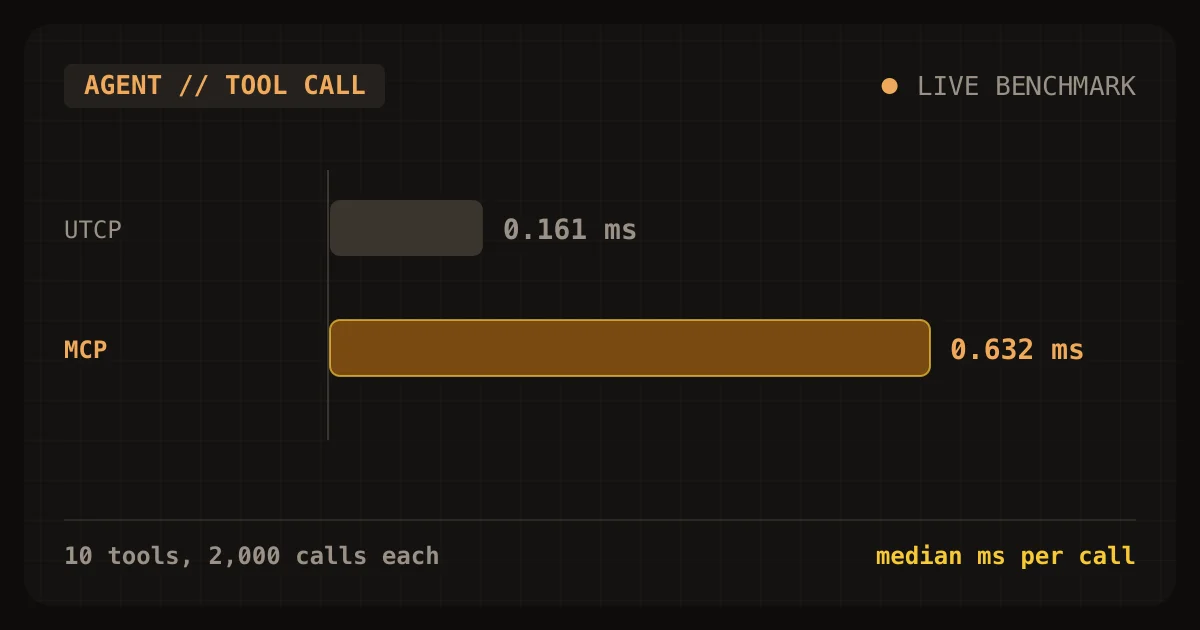
On identical tools, a UTCP call took 0.161 ms and an MCP call 0.632 ms. Tool definition size was nearly the same. Here is how to choose.
Wed Nov 04 2026 · 10 min read · 2 views
Are agent skills safe to install? A 1.7M-install trojan
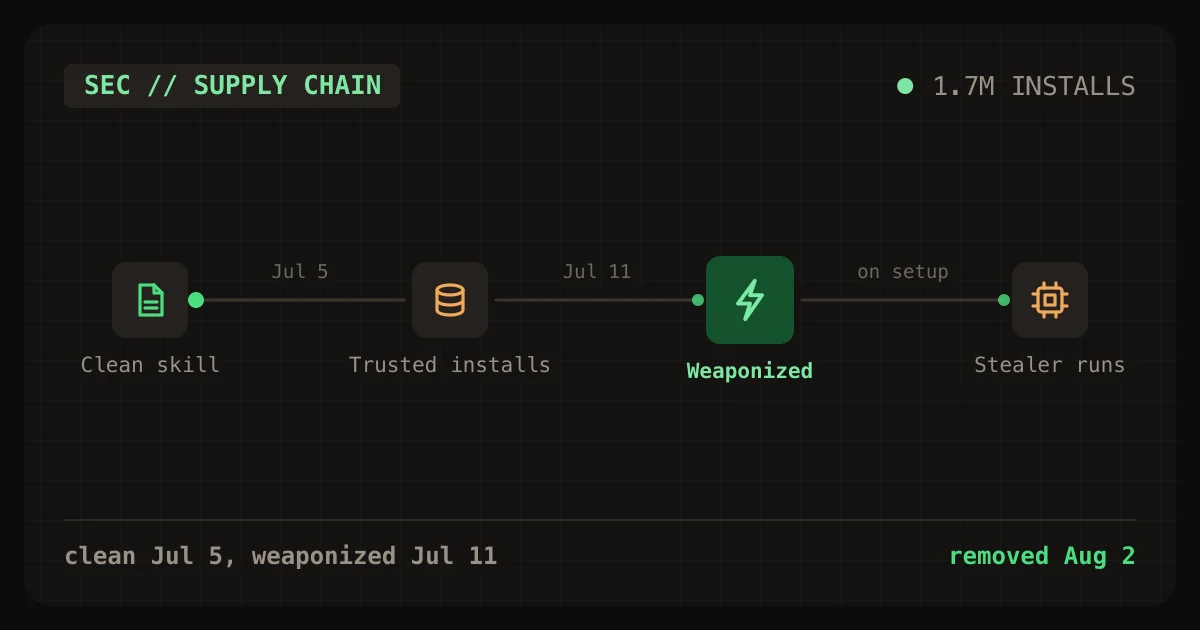
Trojanized skills hit 1.7M displayed installs before takedown. See how the attack worked, a 6-check audit script, and what it found on a real dev machine.
Wed Oct 28 2026 · 9 min read · 1 views
Gemini 3.7 Flash now runs as 3.8 Flash: what to check
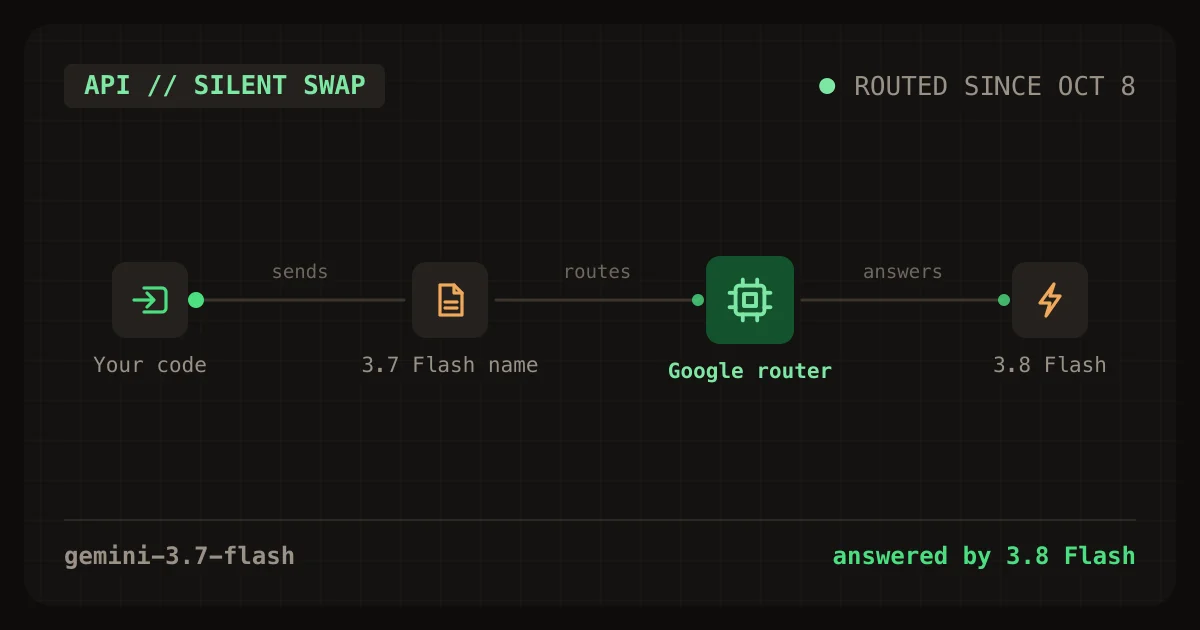
Google quietly routes gemini-3.7-flash calls to 3.8 Flash. Check your logs, the minimal thinking error, and the Jan 1, 2027 price doubling. Scanner and test included.
Wed Oct 28 2026 · 9 min read · 2 views