Why Demis Hassabis stepped back from DeepMind
By Nihar Ranjan Das · Sat Aug 08 2026 · 7 min read · 5 views · Updated Mon Oct 12 2026
View as a Web StoryAI#demis hassabis#google deepmind#koray kavukcuoglu#jeff dean#discovery loop#gemini#alphabet#agi
Demis Hassabis stepped back from running Google DeepMind on August 5, 2026, and the stated reason is focus on long-horizon AGI and science. The reporting since then points to a second reason: a lab that felt it was falling behind. Fortune's account describes delayed models, low morale and a run of senior departures. Google disputes parts of that picture, so this post separates what Google said from what staff told reporters.
What changed since August
- Hassabis's role is clearer. Google's announcement made him chair of Google DeepMind and Alphabet's chief scientist, and he stays based in London, according to Fortune.
- The "why" got a second layer. Anonymous staff told Fortune that Gemini model delays and a sense of falling behind hurt morale.
- Discovery Loop is raising a lot more money. Reports in September put talks at a roughly $50 billion valuation, up from about $10 billion weeks earlier.
- Still unconfirmed. Whether Gemini 3.5 Pro has shipped. We could not confirm a release in the sources we found.
What did Google announce on August 5?
Hassabis moved out of the day-to-day chief executive role. Koray Kavukcuoglu, previously DeepMind's chief technology officer, became senior vice president of Google DeepMind and reports directly to Sundar Pichai. His remit covers Gemini model work, frontier research, the Gemini app and the developer tools, per Axios.
AGI means a system that can do most tasks a person can, not one narrow job. Hassabis said he will work with Pichai on strategic and global questions about it, and described the moment as "a pivotal moment in human history," in the-decoder's account of the reshuffle.
| Person | Before | After |
|---|---|---|
| Demis Hassabis | CEO, Google DeepMind | Chair, Google DeepMind; chief scientist, Alphabet |
| Koray Kavukcuoglu | CTO, DeepMind | SVP, Google DeepMind |
| Jeff Dean | Chief scientist, Google | Co-founder, Discovery Loop |
Coverage frames the result as three lanes. Kavukcuoglu ships Gemini, Hassabis pursues AGI and scientific discovery inside Alphabet, and Dean's group does longer-term research outside Google.
Who left, and when
The larger story is the exits. Dean left after 27 years with Sanjay Ghemawat, Oriol Vinyals and Quoc Le to co-found Discovery Loop. That departure came after others, which is why the timing reads as a pattern.
| When | Who | Where they went |
|---|---|---|
| February | David Silver | Not stated in our sources |
| June | Noam Shazeer, Gemini co-lead | OpenAI |
| June | John Jumper, Nobel laureate and AlphaFold co-inventor | Anthropic |
| June | Alex Turner, AI safety team | Resigned over the Pentagon deal |
| Recent | Jonas Adler and Alexander Pritzel, AlphaFold veterans | Anthropic |
| August 5 | Jeff Dean, Sanjay Ghemawat, Oriol Vinyals, Quoc Le | Discovery Loop |
The dates and destinations come from Fortune, except Silver's February exit, which our August post reported from Fast Company. Fortune gives no date for Adler and Pritzel.
!Chart of named senior Google DeepMind departures by month in 2026: one in February, three in June, four on August 5
What Fortune says went wrong
Fortune's piece rests on three anonymous current engineers and one former employee, plus an outside benchmark analyst. Treat it as reporting from the inside, not as a verdict. The main claims:
- Gemini 3.5 Pro slipped repeatedly. It was unveiled at Google I/O in May with a promise to ship the following month. It missed a June target and a mid-July date, and Fortune counts three missed deadlines.
- Staff blamed coding. Three engineers said the delays came from too little focus on AI coding ability.
- Morale suffered. Staff described a repeated feeling of falling behind, and one engineer said they had worked "60-hour weeks for quite a long time."
- Benchmarks lag on agents. Micah Hill-Smith of Artificial Analysis said Gemini 3.6 Flash ranks behind models from Anthropic, OpenAI, several Chinese labs, xAI and Meta on his index, with the biggest gap in coding-agent tests.
- A Google spokesperson acknowledged the need to improve coding and agentic capabilities. Google also disputes the claim that power is shifting to Mountain View.
!Timeline of Gemini 3.5 Pro showing the May 19 announcement, the missed June and mid-July targets, the July 16 delay report and its absence from the API list on August 12
Bloomberg reported on July 16 that the launch was delayed after the model missed internal quality goals. A mid-August check found it missing from the Gemini API model list, with Gemini 3.7 Flash added on August 14. We found no confirmation of a Pro release after that, so check Google's model page before you plan around it.
Advertisement
How strong is each explanation?
Not every claim in this story carries the same weight. This is how we would grade them, based on who said it and whether it can be checked.
| Claim | Who says it | How checkable |
|---|---|---|
| Hassabis moved to chair and chief scientist | Google, Pichai | Official announcement |
| Four researchers left to found Discovery Loop | Multiple outlets | Confirmed by the founders' move |
| Gemini 3.5 Pro missed its targets | Fortune, Bloomberg | Partly checkable: it was absent from the API list on August 12 |
| Morale and burnout problems | Anonymous staff in Fortune | Not checkable, single outlet |
| Power shifting to Mountain View | Anonymous engineers | Disputed by Google |
| Gemini trails on coding agents | One benchmark analyst | Checkable on public indexes |
The first two rows are facts. The middle rows are well supported. The last rows are sentiment, which is useful context but a weak basis for predicting what Google will ship.
What is Discovery Loop?
Discovery Loop is a public benefit corporation, meaning a company that weighs a stated public mission alongside profit. It says it is working on "automating discovery to accelerate science and engineering," in practice by using AI to run thousands of experiments in parallel, according to Tech Funding News.
The money story is moving fast, and the numbers disagree:
| Reported figure | Source detail |
|---|---|
| Talks for $1 billion at about a $10 billion valuation | Early reporting |
| A $100 million round at $10 billion | One outlet, size disputed |
| "Hundreds of millions" | Axios, as cited by another guide |
| Talks at about $50 billion | Business Insider, via Tech Funding News, September 14 |
Treat the $50 billion figure as a target from anonymous sources, not a closed round. The first round was co-led by Radical Ventures and Khosla Ventures, with Lightspeed, Kleiner Perkins and Doerr Capital also in. Reports say Alphabet invested and is the cloud partner for the first year, so Google is funding the company that hired away its chief scientist.
Is Discovery Loop a rival or a partnership?
Both, and that is the interesting part. Dean's group targets models that help run research with little human supervision, which overlaps with Google's own AGI goals. But with Alphabet as investor and cloud supplier, Google keeps a seat at the table.
Read it as an outsourced research bet. Google gets exposure to a long-horizon effort without running it inside a product organization that ships an app every quarter. The founders get a free hand and compute. The risk is that the best researchers now work for a separate company with its own incentives.
What it means for Gemini and for developers
In the short term, probably little changes in the products. Roadmaps run months ahead, and Kavukcuoglu already led the technical side. What changes is who is accountable: one executive now owns research, the model, the app and the developer tools.
For teams building on Gemini, three practical points follow:
- Do not plan around a model that has not shipped. If your roadmap assumes Gemini 3.5 Pro, confirm availability in the API model list first.
- Keep a fallback provider. The gap on coding-agent benchmarks that Hill-Smith described is exactly where agent products live.
- Watch the Flash line. Google shipped three smaller Flash models and said it had begun training Gemini 4, per Fortune, so the near-term gains are more likely to arrive there.
The context outside the lab
Two other threads in Fortune's reporting explain the mood. In April, Google signed a Pentagon deal that allows Gemini on classified networks, and more than 580 employees signed an open letter asking Pichai to reconsider. In May, DeepMind staff in London launched a union bid that Google has not voluntarily recognized; talks are going through ACAS.
None of that proves a causal chain to Hassabis's decision. It does show a lab under pressure from several directions at once, which is a better frame than "the CEO moved up."
The takeaway
The official story is a leadership reshuffle for focus. The reported story is a lab that lost senior researchers, missed model dates and fell behind on coding agents, while a spin-out raised money at a fast-rising valuation. The truth likely contains both. What to watch next is simple: whether Gemini 3.5 Pro ships, whether more senior researchers follow Dean, and whether Discovery Loop's round closes at the reported $50 billion.
Advertisement
FAQ
Did Demis Hassabis get fired from DeepMind?
No. Google announced on August 5, 2026 that Hassabis became chair of Google DeepMind and Alphabet's chief scientist. He stays in the company and remains based in London. Anonymous staff told Fortune the lab had morale and delay problems, but Google framed the move as a focus on science and long-term AGI strategy.
Who runs Google DeepMind now?
Koray Kavukcuoglu runs it day to day as senior vice president of Google DeepMind. He was DeepMind's chief technology officer and reports directly to Sundar Pichai. His remit covers Gemini model work, frontier research, the Gemini app and the developer tools, so research and product now sit under one executive.
What is Discovery Loop and who founded it?
Discovery Loop is a public benefit corporation founded by Jeff Dean, Sanjay Ghemawat, Oriol Vinyals and Quoc Le. It aims to automate discovery to accelerate science and engineering. Radical Ventures and Khosla Ventures co-led its first round, and Alphabet is reported as an investor and cloud partner.
Why did Gemini 3.5 Pro get delayed?
Google announced it at I/O on May 19 with a June target, then missed that and a mid-July date, per Fortune. Bloomberg reported on July 16 that it missed internal quality goals. Three engineers told Fortune the cause was too little focus on AI coding ability. Google says it is in testing.
How much is Discovery Loop worth?
Reports differ. Early coverage cited talks for $1 billion at about a $10 billion valuation, and one outlet reported a $100 million round at that value. Business Insider reported in September that talks were at about $50 billion. The $50 billion figure is a target from anonymous sources, not a closed round.
Comments
Loading…
Sign in to join the conversation.
Related posts
MCP vs UTCP: we timed both on the same 10 tools
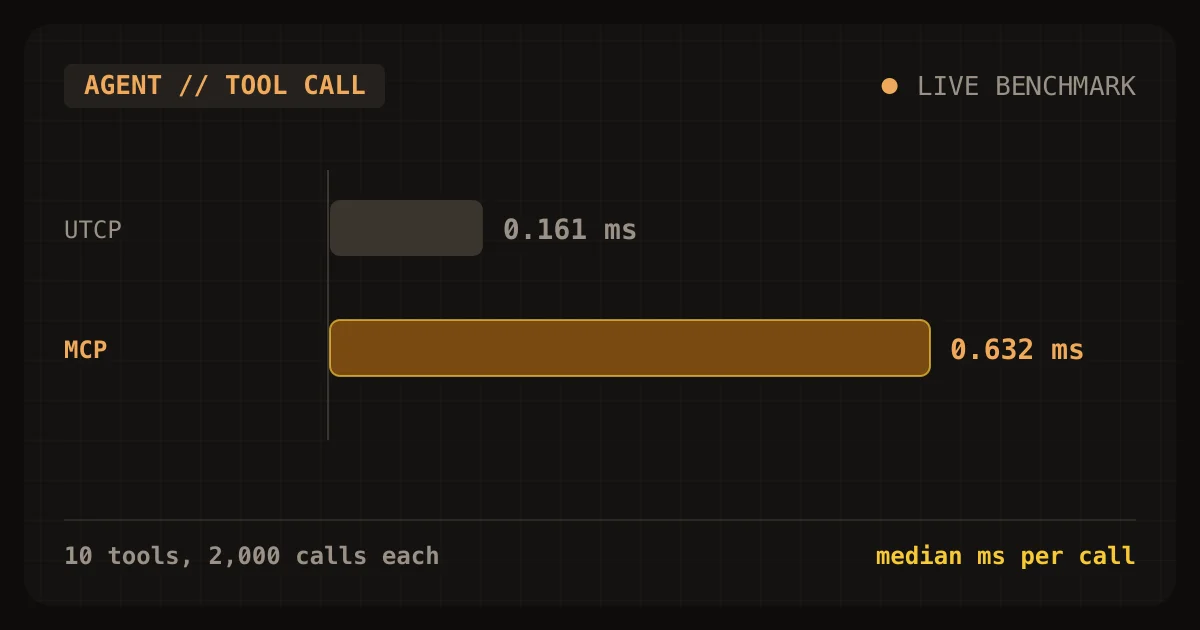
On identical tools, a UTCP call took 0.161 ms and an MCP call 0.632 ms. Tool definition size was nearly the same. Here is how to choose.
Wed Nov 04 2026 · 10 min read · 7 views
Are agent skills safe to install? A 1.7M-install trojan
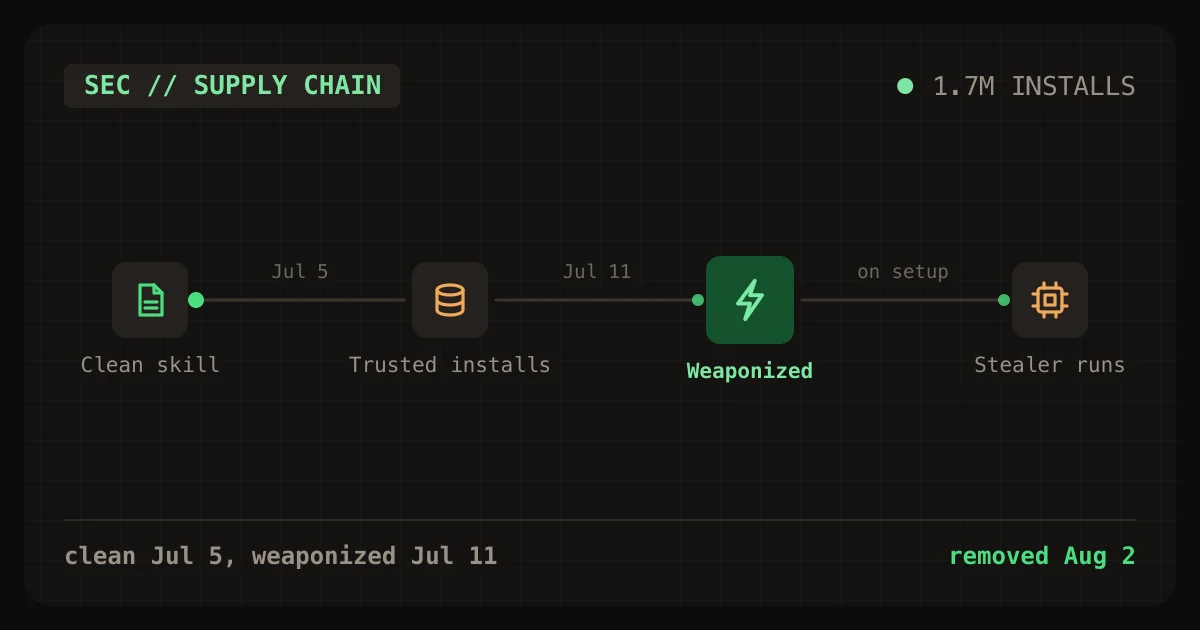
Trojanized skills hit 1.7M displayed installs before takedown. See how the attack worked, a 6-check audit script, and what it found on a real dev machine.
Wed Oct 28 2026 · 9 min read · 1 views
Gemini 3.7 Flash now runs as 3.8 Flash: what to check
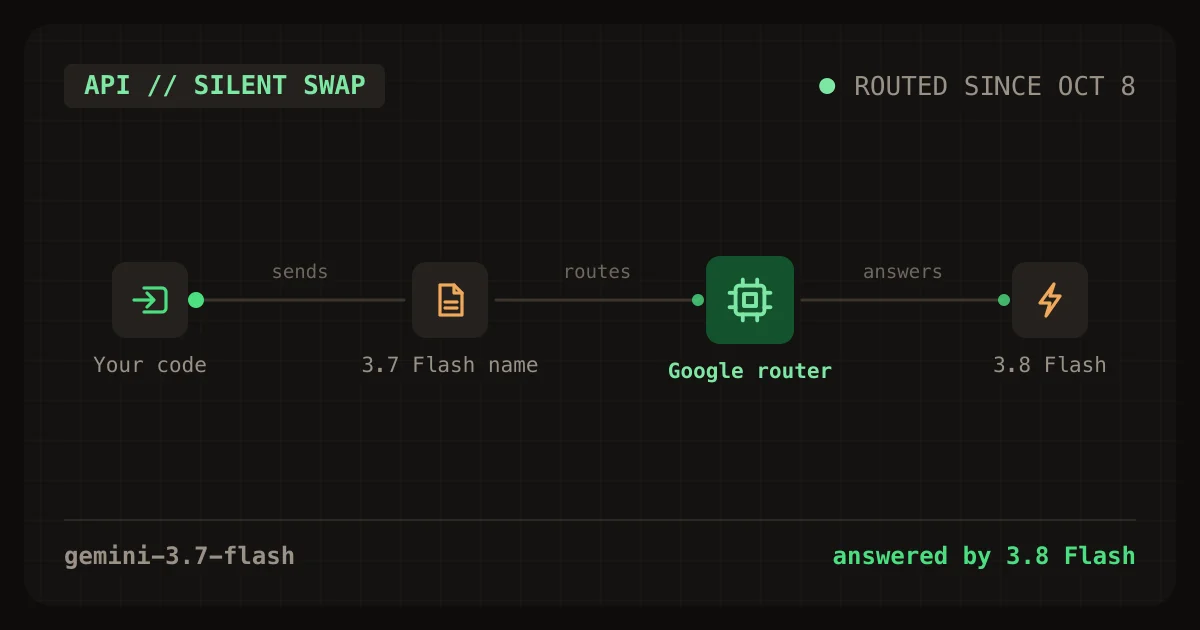
Google quietly routes gemini-3.7-flash calls to 3.8 Flash. Check your logs, the minimal thinking error, and the Jan 1, 2027 price doubling. Scanner and test included.
Wed Oct 28 2026 · 9 min read · 2 views