Best AI agent framework 2026? Rank them by churn
By Nihar Ranjan Das · Thu Aug 20 2026 · 5 min read · 4 views
View as a Web StoryAI#ai agents#Microsoft Agent Framework#LangGraph#CrewAI#bedrock

The churn record, with dates
Here is the past year, judged only on what existing code had to do.
| Framework | Lifecycle event | Date | Did existing code keep running? |
|---|---|---|---|
| Microsoft Agent Framework | 1.0 unifies AutoGen and Semantic Kernel | April 2, 2026 | No, renames and removals throughout |
| Amazon Bedrock Agents Classic | Closed to new customers, catalog frozen | July 30, 2026 | Yes for allowlisted accounts only |
| Pydantic AI | v2 with silent API-surface change | June 23, 2026 | Mostly, with two silent behaviour changes |
| AutoGen | Folded into Microsoft Agent Framework | 2026 | No, migration required |
| LangGraph | 1.0, standalone from LangChain | October 2025 | Yes |
| CrewAI | Stable 1.x line | 2026 | Yes |
The pattern is not about quality. It is about who is rebuilding a platform and who is keeping one steady. For example, a team on LangGraph spent this year writing agents, while a team on Microsoft Agent Framework spent part of it renaming classes.
Microsoft Agent Framework: the highest-churn option
Microsoft Agent Framework is Microsoft's agent library for Python and .NET, formed by merging AutoGen and Semantic Kernel into a single product. It is capable, and it is the most expensive framework to follow.
Microsoft's own Python 2026 significant changes guide documents breaking changes across 22 releases between January 14 and June 4, 2026. The list includes core renames: ChatAgent became Agent, ChatMessage became Message, AIFunction became FunctionTool, and AgentThread became AgentSession.
Then it kept going after 1.0. Version 1.7.0, on May 28, 2026, removed Python-only declarative action types and renamed alias kinds to match C#. Version 1.6.0 turned OpenTelemetry instrumentation on by default a week earlier.
Choose it if you are on Azure and want first-party support. Budget upgrade time every month, not every year.
Bedrock Agents Classic: the door closed on July 30
Amazon renamed Bedrock Agents to Bedrock Agents Classic and stopped accepting new customers. The AWS maintenance mode documentation states the terms precisely, and the details matter more than the headline.
- Existing agents keep working, and there is no announced end-of-life date.
- Accounts with Bedrock Agents activity in the past 12 months are allowlisted.
- Accounts without it get
AccessDeniedException(HTTP 403) onCreateAgentandInvokeInlineAgent. - The model catalog is frozen as of July 30, 2026, so new models arrive only through AgentCore.
- There is no exception process for new accounts.
That frozen catalog is the real deadline. A platform that cannot adopt next quarter's model is on a clock even without an end-of-life date.
Migration is less painful than the rumour mill suggests. AWS says a simple agent, meaning a model plus action groups plus a knowledge base, takes hours through the AgentCore CLI. Agents with custom orchestration or several agents working together need real code work.
Pydantic AI: low churn, but the wrong kind
Pydantic AI shipped v2 on June 23, 2026, and its churn is small in volume and awkward in type. The v2 release write-up confirms that openai: model names now use the Responses API, with openai-chat: retained for Chat Completions.
Advertisement
That change raises no error. Nor does the new default for aggregated token-usage attribute names, which moves usage reporting on agent run spans. Both can ship to production through a green test suite.
The version policy also tightened. The no-breaking-changes window between majors dropped from six months to three, per the Pydantic AI version policy. Two quiet behaviour changes plus a shorter promise is a different risk profile from twenty loud renames.
LangGraph and CrewAI: the boring choices
LangGraph and CrewAI asked the least of existing users this year, which is the main argument for both.
LangGraph is a graph-based agent runtime from the LangChain team, built around explicit nodes and persisted state. It became a standalone package at version 1.0 in October 2025, so it no longer requires LangChain abstractions (framework comparison, 2026).
CrewAI is a role-based framework where each agent gets a persona, a toolset and a task. Its stable branch is now at 1.15.x, with persistence, partial streaming and better error handling. That is the shape of a maintenance release, not a rebuild.
Orchestration style still shows up on the invoice. The same comparison reports AutoGen using 3 to 5 times more tokens than LangGraph for the same task in production, which is a reason to measure before scaling any multi-agent pattern. For example, a nightly job running 5,000 simple tasks will expose that gap, while a prototype never will.
Shared protocols lower the stakes
Lock-in matters less than it did, because the protocol layer is now shared. Microsoft Agent Framework speaks MCP and A2A. AgentCore exposes action groups as MCP tools through its gateway, per the AWS migration guide.
That has a security consequence worth naming. A comparative threat model of agent protocols published in February 2026 identified 12 protocol-level risks across MCP, A2A, Agora and ANP, including tools executed from the wrong provider under multi-server configurations. Portability and exposure arrive together.
Two practical notes for teams already running agents. AutoGen is in maintenance mode. Where to migrate now is the question the churn table answers, with dates rather than opinions. And most teams still ship agents without a test suite, which is why evaluation matters more than the framework you land on.
So which one should you choose?
Choose LangGraph for production work in Python that must run on any cloud, and for agents that keep state for a long time. It has the calmest upgrade record of the group, dating to its standalone 1.0 release in October 2025.
Choose CrewAI to get a multi-agent prototype running this week, and re-measure token spend before it becomes a nightly job.
Choose Microsoft Agent Framework if you are committed to Azure and want .NET and Python parity. Staff the upgrade work honestly.
Choose AgentCore if you are already on AWS, and treat the frozen Bedrock Agents Classic catalog as your migration trigger.
Choose Pydantic AI if your team values typed, testable agent code, and add a grep for openai: to your upgrade checklist.
Advertisement
FAQ
Which AI agent framework is most stable in 2026?
LangGraph has the calmest recent record. It went standalone at 1.0 in October 2025 and has not required a rewrite since. CrewAI's 1.x line is similarly maintenance-oriented. Microsoft Agent Framework changed most, with breaking changes across 22 Python releases in 2026.
Is Amazon Bedrock Agents being shut down?
No. Bedrock Agents Classic entered maintenance mode on July 30, 2026, with no announced end-of-life date. Existing workloads keep running for allowlisted accounts. New customers cannot create agents, and the model catalog is frozen, so new models arrive only through AgentCore.
How long does migrating from Bedrock Agents Classic to AgentCore take?
AWS says a straightforward agent, meaning a model with action groups and a knowledge base, takes hours using the AgentCore CLI or the migration skill in the agent toolkit for AWS. Agents with custom orchestrators or multi-agent collaboration require substantially more code work.
Should I still start a new project on AutoGen?
No. AutoGen has been folded into Microsoft Agent Framework, which shipped 1.0 on April 2, 2026. New projects should start on the successor or on a different framework entirely. Existing AutoGen code needs a migration plan rather than an upgrade.
Does the agent framework choice affect token cost?
Yes. Orchestration style changes how much context is re-sent each step. Published comparisons report CrewAI using up to 3 times the tokens of LangGraph on simple workflows. Measure your own workload before scaling, because per-task cost, not per-token price, sets the bill.
Comments
Loading…
Sign in to join the conversation.
Related posts
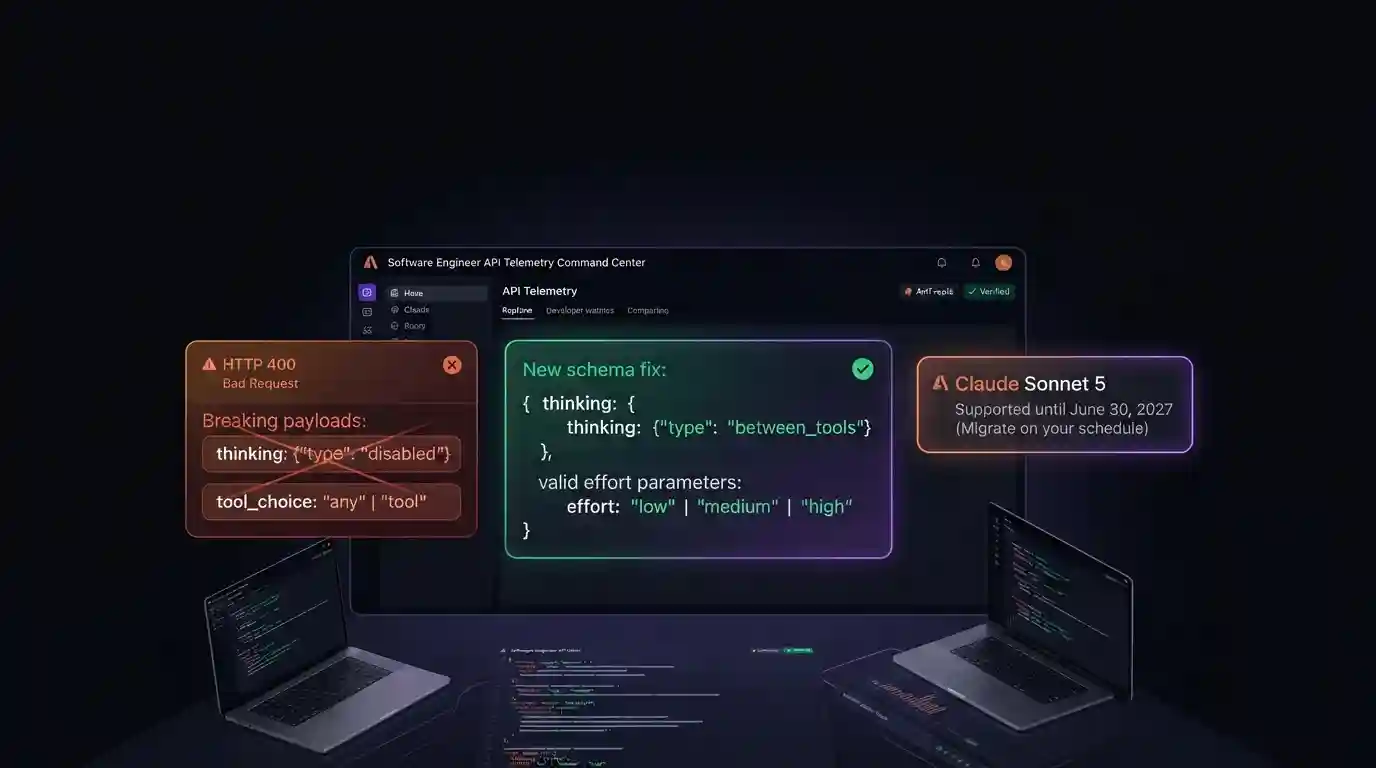
Claude Sonnet 5.5 migration: which changes return a 400
Claude Sonnet 5.5 launched on September 28, 2026 at the same price as Claude Sonnet 5, $2 per million input tokens and $10 per million output tokens. Moving to it is not a model-ID swap. Several
Tue Sep 29 2026 · 6 min read · 2 views
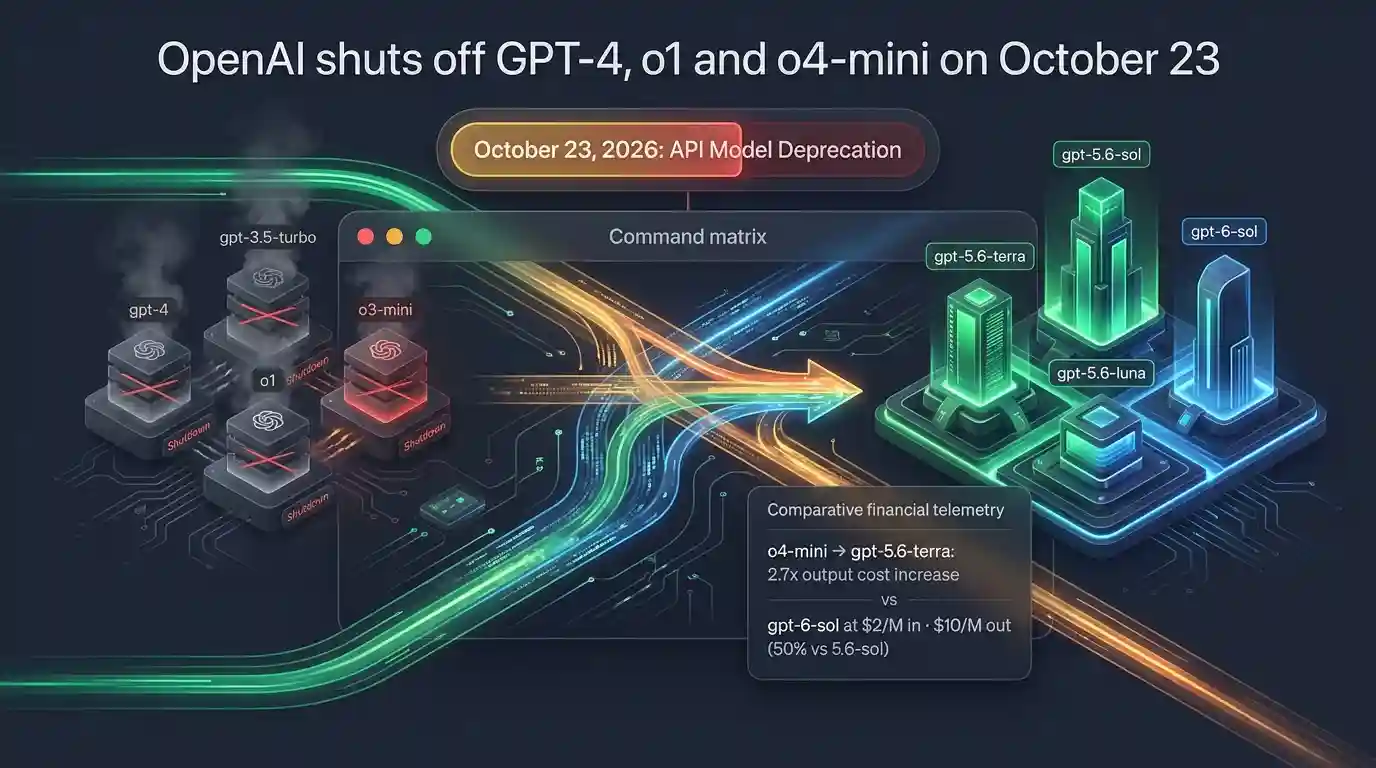
OpenAI shuts off GPT-4, o1 and o4-mini on October 23
OpenAI shuts off GPT-4, GPT-3.5 Turbo, GPT-4 Turbo, o1, o1-pro, o3-mini, o4-mini and several other models on its API on October 23, 2026. That is 24 days away. Any call that names one of those models
Tue Sep 29 2026 · 6 min read · 6 views

AI SDK 7 Changed usage. Your Token Counts Are Now Wrong
If a project upgraded to AI SDK 7 and its per-request token costs suddenly look higher than before, nothing is actually costing more. result.usage used to report only the final step's tokens. In AI
Tue Sep 29 2026 · 6 min read · 2 views