Pydantic AI v2 migration: the change that throws no error
By Nihar Ranjan Das · Thu Aug 20 2026 · 5 min read · 7 views
View as a Web StorySoftware#ai agents#llm#python#pydantic ai#migration
The change that produces no error
In v2, openai: model names resolve to the Responses API instead of Chat Completions. Nothing errors. Your agent runs, returns text, and bills against a different API surface than the one you tested on v1.
The v2 release notes put it in one line: openai: model names now use the Responses API, and openai-chat: keeps you on Chat Completions.
The Responses API is OpenAI's newer stateful endpoint. It handles built-in tools and reasoning items in a different way from Chat Completions. So the changes you may notice are in tool-call shape, reasoning-token counts and streaming events, not in whether the call works.
Two safe options exist:
- Pin the old behaviour first. Change
openai:gpt-5.4toopenai-chat:gpt-5.4, ship the upgrade, and change nothing else. - Move to the Responses API deliberately, in its own pull request, with your evaluation suite watching tool-call accuracy.
Doing both in one commit is how teams spend a week arguing about which change caused a regression.
Your token dashboards may quietly read zero
The second silent change is instrumentation. In v2, use_aggregated_usage_attribute_names defaults to True, so agent run spans report token usage under gen_ai.aggregated_usage.*, while model request spans keep gen_ai.usage.*.
That default exists for a good reason. It stops backends counting parent and child spans twice. But any dashboard or budget alert that reads token usage from run spans under the old names now sees nothing. No error is raised, because nothing failed. Cost tracking just goes quiet.
Set use_aggregated_usage_attribute_names=False if you need the v1 attribute names for now, then migrate the queries. For example, a spend alert wired to gen_ai.usage.input_tokens on run spans has to move to the aggregated name or point at request spans instead.
What breaks loudly, and is therefore safer
Loud breakage is the easy half of this migration. Your imports fail, you fix them, you move on. The v2 announcement lists 6 changes worth checking before you deploy, and only 2 of them are silent.
| Change in v2 | Fails loudly? | What to do |
|---|---|---|
openai: now uses the Responses API |
No | Use openai-chat: to stay on Chat Completions |
| Aggregated usage attributes default on | No | Repoint dashboards or set the flag to False |
MCPServerStdio, MCPServerSSE, MCPServerStreamableHTTP removed |
Yes | Move to the current MCP interface |
| Provider extras no longer bundled | Yes | Install the extra, such as pydantic-ai[bedrock] |
| Web search and fetch native by default | Partly | Check for duplicate tool definitions |
| Function tools now run alongside a successful output tool | No | Review end_strategy assumptions |
Provider extras are worth a second look. Bedrock, Groq, Mistral and Cohere no longer come with a bare pip install pydantic-ai. So a container that built fine in June can now fail at import time.
Advertisement
The two-step upgrade that actually works
Do not jump from an old v1 to v2 in one move. The Pydantic AI upgrade guide recommends a staged path, and it removes most of the work before v2 is ever installed:
- Upgrade to the latest v1 release and pin it.
- Run your test suite with warnings visible, then clear every deprecation warning.
- Bump to v2 and fix the import errors, which surface immediately.
- Grep the codebase for
openai:and decide, per model string, which API you want. - Re-point observability queries, then compare a day of token spend against the previous week.
Steps one and two handle roughly 80% of the work, per Pydantic's upgrade guidance. Steps four and five are the ones nobody schedules, and they are where the silent changes live.
The clock is now shorter than it was
Pydantic changed its version policy alongside the release. The no-breaking-changes window between major versions moves from six months to three, as stated in the Pydantic AI version policy.
That halves the planning horizon for anyone who treats framework upgrades as an annual chore. In practice, a team on this framework should assume a possible major every quarter, and should keep an evaluation suite that can tell whether agent quality moved after an upgrade. If you have watched agents fail in production, you already know that a passing unit test says very little about agent behaviour.
Upgrade now, or wait?
Upgrade now if you call OpenAI models through Pydantic AI. The openai: change sits in your code path either way. Waiting does not remove it. It only delays the day you find out.
The dates make the case. Version 2 landed on June 23, 2026, and the version policy now promises just 3 months of stability between majors. A team that skips this one may face two migrations at once.
Wait a few weeks if you rely on a provider extra and your build has no lockfile. Fix the lockfile first, then upgrade. For example, an image that installs from a loose requirements.txt will pull v2 on the next build with no review at all.
Skip the rush entirely if your agents are on Anthropic or Google models, use no MCP servers, and have no token dashboards. That configuration touches none of the silent changes, so the migration is a genuine afternoon.
One planning note either way: agent memory that does not wreck your prompt cache is a separate concern from this upgrade, but both land in the same request path. Change one at a time, or you will not know which one moved your cost per run.
Advertisement
FAQ
What is the biggest breaking change in Pydantic AI v2?
The `openai:` model prefix now targets the Responses API instead of Chat Completions. It raises no error, so it can reach production silently. Use `openai-chat:` to keep the previous behaviour, and change API surface in a separate, tested pull request.
How do I keep Chat Completions after upgrading to Pydantic AI v2?
Prefix the model name with `openai-chat:` instead of `openai:`. That single string change preserves the v1 endpoint. Grep the whole repository for `openai:` before deploying, including configuration files, environment defaults and test fixtures.
Why did my token usage metrics disappear after the Pydantic AI upgrade?
Version 2 defaults `use_aggregated_usage_attribute_names` to `True`. Agent run spans now report usage under `gen_ai.aggregated_usage.*`, so dashboards reading `gen_ai.usage.*` from run spans see nothing. Repoint the queries or set the flag to `False` temporarily.
Is pip install pydantic-ai still enough for Bedrock or Groq?
No. Provider extras such as Bedrock, Groq, Mistral and Cohere became opt-in dependencies in v2. Install them explicitly, for example `pip install "pydantic-ai[bedrock]"`, and rebuild any container image that assumed the old bundled install.
How often will Pydantic AI ship breaking changes now?
The guaranteed no-breaking-changes window between major versions is three months, down from six. Plan for a possible major release each quarter, keep an evaluation suite that measures agent output quality, and budget upgrade time rather than treating it as an emergency.
Comments
Loading…
Sign in to join the conversation.
Related posts
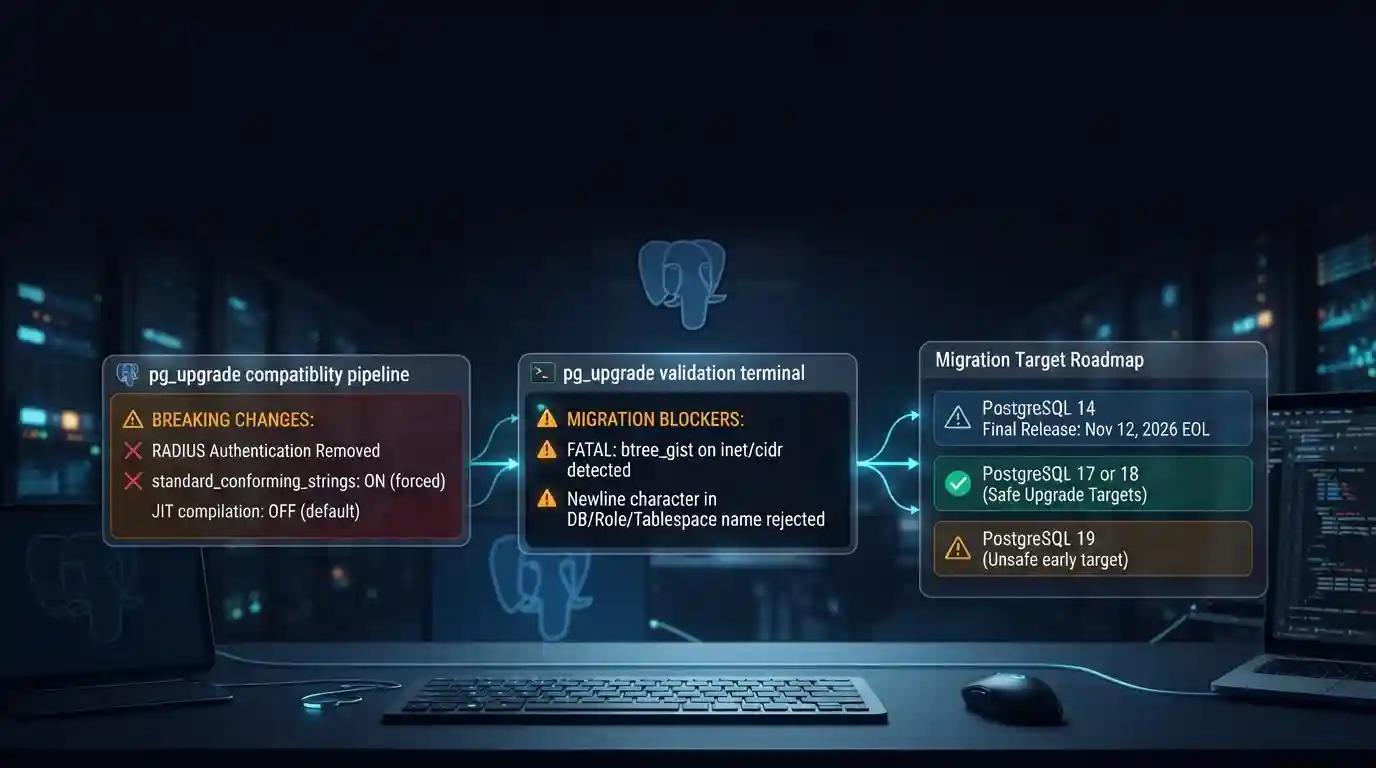
PostgreSQL 19 breaking changes to check before upgrading
PostgreSQL 19 is not released yet, but its list of breaking changes is already fixed enough to check your cluster against. The PostgreSQL project released Beta 4 on September 24, 2026. It says the
Tue Sep 29 2026 · 6 min read · 7 views
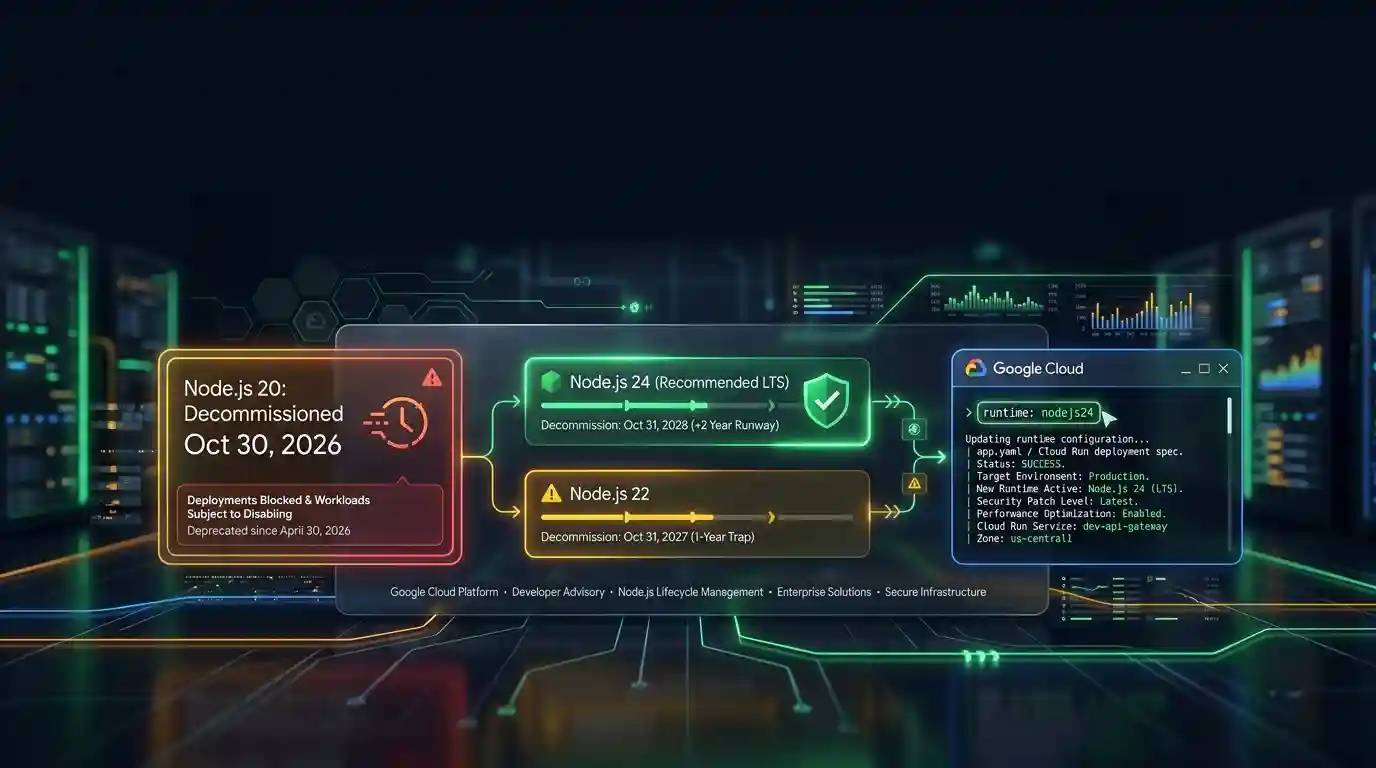
Google Cloud decommissions Node.js 20 on October 30
Google Cloud decommissions the Node.js 20 runtime on Cloud Run and Cloud Run functions on October 30, 2026. That is 31 days away. From that day you cannot create or redeploy a workload on it, and
Tue Sep 29 2026 · 6 min read · 5 views
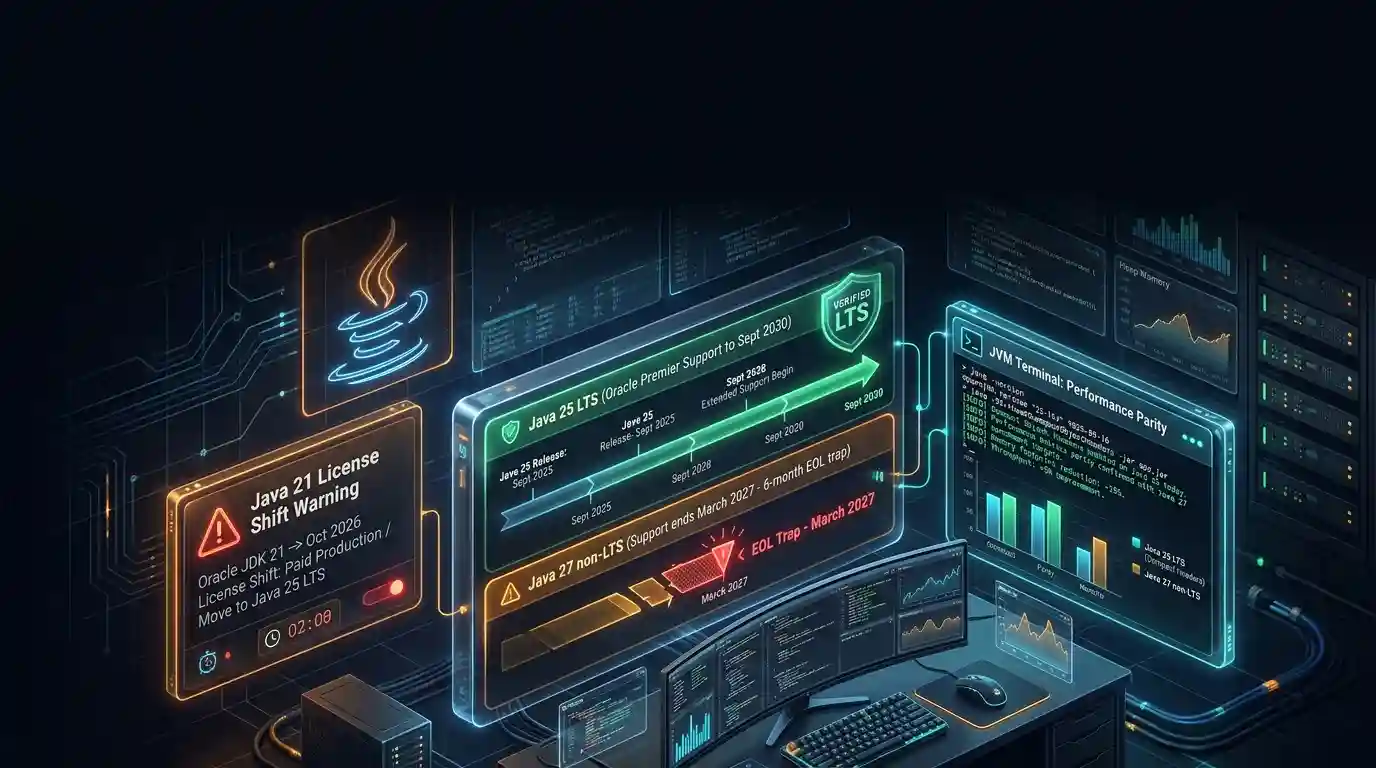
Java 27 is not LTS: should you leave Java 25?
Java 27 shipped on September 15, 2026, and it is not a long-term-support release. Oracle says it will provide updates to JDK 27 until March 2027, when Oracle JDK 28 supersedes it. The next
Tue Sep 29 2026 · 6 min read · 5 views