Sonnet 5's September price rise is cancelled. Now what?
By Nihar Ranjan Das · Wed Aug 19 2026 · 5 min read · 8 views
View as a Web StoryAI#anthropic#ai api pricing#llm costs#claude sonnet 5#model routing

Sonnet 5's September price rise is cancelled. Now what?
If you moved workloads off Claude Sonnet 5 to dodge a September price increase, move them back. Anthropic confirmed that the introductory rate of $2 per million input tokens and $10 per million output tokens is now the standard price, and that the planned increase to $3/$15 on September 1, 2026 will not occur, per the official Claude pricing documentation.
That is a 33% saving (Anthropic, 2026) on input and output against the price many teams had already written into their 2027 budget. It also resets a comparison that several vendors spent the summer rearranging.
What Anthropic actually changed
Claude Sonnet 5 is Anthropic's mid-tier model, positioned between the cheaper Haiku line and the Opus line. The Batch API is Anthropic's asynchronous request mode, which discounts input and output by 50% (Anthropic, 2026). It launched with introductory pricing marked as valid through August 31, 2026. The introductory label is gone, and the rate is unchanged.
The reversal matters because the old price was already on calendars. Coverage in early August still described a confirmed 50% increase on both input and output from September 1, 2026, before the plan was withdrawn, as one industry write-up recorded at the time. Teams that acted on that reporting made a decision on a fact that has since changed.
There is a second detail in the same table. Claude Sonnet 4.6 and Sonnet 4.5 remain at $3 per million input tokens and $15 per million output tokens. The newer model is now the cheaper one, which is unusual and worth checking in any config that still pins an older Sonnet.
The mid-tier price ladder in August 2026
Rates cluster tightly at this tier, which is the real story. Prices below are per million tokens, input first.
| Model | Input | Output | Notes |
|---|---|---|---|
| Claude Sonnet 5 | $2.00 | $10.00 | Increase to $3/$15 cancelled (Anthropic, 2026) |
| Claude Sonnet 4.6 | $3.00 | $15.00 | Older model, higher price |
| Claude Haiku 4.5 | $1.00 | $5.00 | Cheapest Claude tier |
| GPT-5.6 Terra | $2.00 | $12.00 | Cut 20% on July 30, 2026 (CloudZero, 2026) |
| Gemini 3.1 Pro | $2.00 | $12.00 | Comparable mid-tier |
| Gemini 3.5 Flash | $1.50 | $9.00 | Cached input at $0.15 |
OpenAI reduced Terra by 20% and Luna by 80% on July 30, 2026 (CloudZero, 2026), according to CloudZero's pricing round-up. Frontier pricing across vendors was tracked at similar levels this month, as Developers Digest set out in its August comparison.
Sonnet 5 is now the cheapest output token among the three mainstream mid-tier models. On an output-heavy workload, that $2 per million gap against Terra and Gemini 3.1 Pro compounds quickly.
Why the sticker price is not your bill
Two models at $2 per million input tokens do not cost the same to run, because they do not agree on what a token is. This is where a spreadsheet comparison of published rates goes wrong.
A tokenizer is the component that splits text into the units a model bills for. Claude models from version 4.7 onward use a newer tokenizer that produces approximately 30% more tokens for the same text, and the exact increase depends on the content, per Anthropic's published note on the change. The same document, sent to two models at the same advertised rate, generates two different bills.
Advertisement
Caching moves the number further. Prompt caching is the feature that stores part of a request so later calls reuse it instead of reprocessing it, documented in Anthropic's prompt caching guide. A cache hit costs 10% of the standard input price (Anthropic, 2026), so Sonnet 5 cached input runs at $0.20 per million tokens. The Batch API halves both sides, taking Sonnet 5 to $1 and $5 per million.
That is why the cheapest AI API is not the cheapest to run, and it is why a routing decision based only on the published table tends to be wrong. Measure your own workload with your own prompts before you switch anything.
What European teams should check
Data residency carries a surcharge, which matters for anyone operating under European rules. Pinning inference to the United States with the inference_geo parameter applies a 1.1x multiplier to every token category, including cache reads and writes, as the data residency documentation sets out.
Regional endpoints on partner clouds carry their own premium. Amazon Bedrock and Google Cloud add 10% for regional and multi-region endpoints against global routing (Anthropic, 2026), for Claude 4.5 models onward.
So a European deployment with pinned residency does not pay $2 per million input tokens. It pays $2.20, before any cache or batch discount. Consider that before comparing a residency-pinned Claude deployment against an unpinned rival.
What to do this week
Three actions cover most teams, in order of payoff.
- Revert any routing change made specifically to avoid the September increase, then confirm quality on your evaluation set before the traffic shifts.
- Check whether any service still pins Claude Sonnet 4.6 at $3/$15, since the newer model is now cheaper and faster to serve.
- Re-run your cost model with measured token counts rather than published rates, including cache hit rates and any residency multiplier.
Keep the evaluation step. A price change is a poor reason to move production traffic without measuring output quality on the work you actually do.
If your routing sits behind an aggregator, re-check what it charges on top. That question got sharper after Stripe bought OpenRouter, and the answer decides whether these list prices are the ones you pay.
Does this change which model you should use?
For most mid-tier work, Claude Sonnet 5 is now the default worth beating. It is cheaper on output than GPT-5.6 Terra and Gemini 3.1 Pro, and cheaper than the older Sonnet models it replaces.
For high-volume classification or extraction, the cheaper tiers still win. Claude Haiku 4.5 at $1 and $5 per million, or Gemini 3.5 Flash at $1.50 and $9.00, will beat any mid-tier model on cost for work that does not need deep reasoning.
For long agent runs, measure before you choose. Tool definitions, cached system prompts and repeated context change the shape of the bill so much that per-token rates stop predicting the total.
Advertisement
FAQ
Is the Claude Sonnet 5 price increase cancelled?
Yes. Anthropic's pricing documentation states that the $2 per million input and $10 per million output rate is now the standard price, and that the increase to $3/$15 scheduled for September 1, 2026 will not occur. No action is needed to keep the lower rate.
How much does Claude Sonnet 5 cost per million tokens?
Claude Sonnet 5 costs $2 per million input tokens and $10 per million output tokens. Cache hits cost $0.20 per million, a 5-minute cache write costs $2.50 per million, and Batch API requests cost $1 and $5 per million. US-pinned inference adds a 1.1x multiplier.
Is Claude Sonnet 5 cheaper than GPT-5.6 Terra or Gemini 3.1 Pro?
On published rates, yes for output. Sonnet 5 charges $10 per million output tokens, while GPT-5.6 Terra and Gemini 3.1 Pro were listed at $12 in August 2026. Input rates match at $2. Tokenizer differences mean real costs can still diverge on your workload.
Why do two models with the same price cost different amounts?
Because each model counts tokens differently. Claude models from version 4.7 onward use a tokenizer that produces roughly 30% more tokens for the same text (Anthropic, 2026). Caching, batching and data residency multipliers change the total further, so measured cost per task beats advertised cost per token.
Does data residency change Claude API pricing?
Yes. Setting `inference_geo` to `"us"` applies a 1.1x multiplier across input, output and cache pricing on Claude 4.6 and later models. On Amazon Bedrock and Google Cloud, regional and multi-region endpoints add a 10% premium over global endpoints (Anthropic, 2026).
Comments
Loading…
Sign in to join the conversation.
Related posts
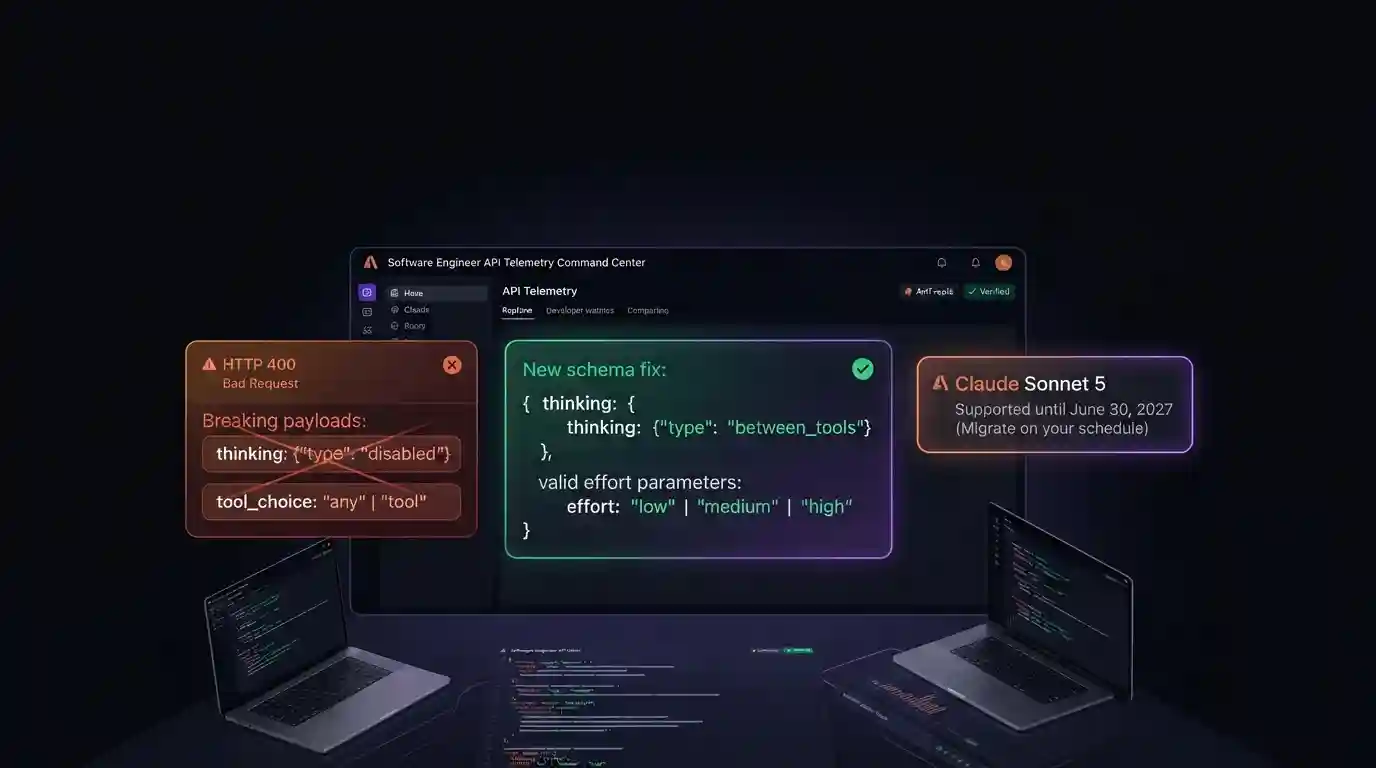
Claude Sonnet 5.5 migration: which changes return a 400
Claude Sonnet 5.5 launched on September 28, 2026 at the same price as Claude Sonnet 5, $2 per million input tokens and $10 per million output tokens. Moving to it is not a model-ID swap. Several
Tue Sep 29 2026 · 6 min read · 2 views
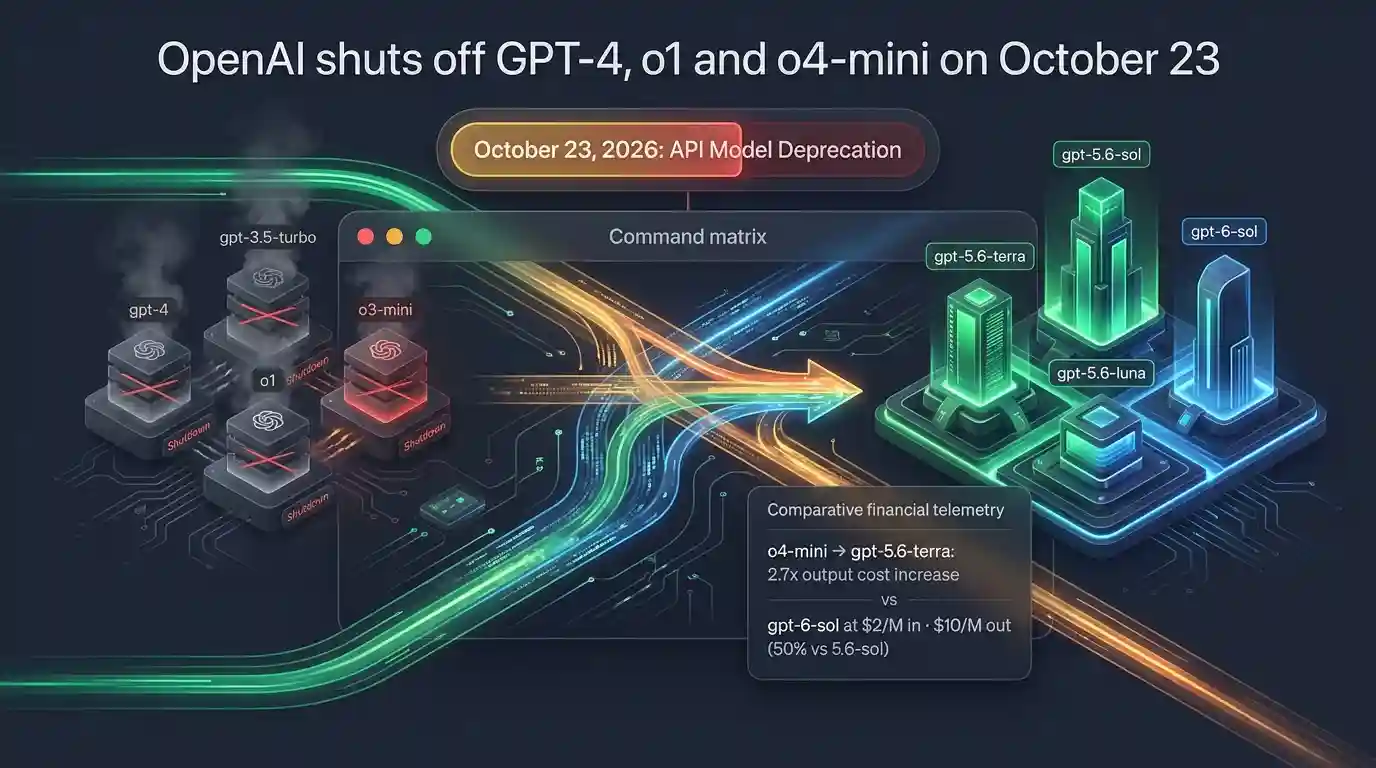
OpenAI shuts off GPT-4, o1 and o4-mini on October 23
OpenAI shuts off GPT-4, GPT-3.5 Turbo, GPT-4 Turbo, o1, o1-pro, o3-mini, o4-mini and several other models on its API on October 23, 2026. That is 24 days away. Any call that names one of those models
Tue Sep 29 2026 · 6 min read · 6 views

AI SDK 7 Changed usage. Your Token Counts Are Now Wrong
If a project upgraded to AI SDK 7 and its per-request token costs suddenly look higher than before, nothing is actually costing more. result.usage used to report only the final step's tokens. In AI
Tue Sep 29 2026 · 6 min read · 2 views