Your AI Agent Bought the Wrong Thing. Who Pays?
By Nihar Ranjan Das · Sun Aug 16 2026 · 6 min read · 1 views
View as a Web StoryAI#ai agents#agentic-commerce#payments#consumer-protection#regulation-e

Browsers and chat apps are now happy to hand an AI agent your payment details and let it check out on your behalf. Nobody has told you what happens when the agent buys the wrong running shoes, buys two of them, or misses a price that changed between the search and the purchase. Regulators have not answered that question either — but the payments rules that already exist answer a narrower and more useful one: your protection depends almost entirely on which card you attached. Debit falls under a rule written on the assumption a human pressed the button. Credit falls under a rule with a broader definition of authority and a dispute right that survives an agent's mistake. Attach the credit card.
The rule everyone is arguing about was written for humans
In the US, debit and bank-account transfers fall under Regulation E, which implements the Electronic Fund Transfer Act. Regulation E hangs everything on one distinction: was the transfer authorized or unauthorized? An unauthorized electronic fund transfer is one initiated by a person other than the consumer without actual authority to initiate it, which in practice turns on demonstrable consent.
Now run an agent through that definition. You told an agent to find and buy the best deal on running shoes. It bought a pair you did not want, at a price you would not have accepted. You consented to the shopping. You did not consent to that purchase. Is it authorized?
Nobody knows. Legal analyses through 2026 keep landing on the same word — unresolved — because Regulation E never contemplated a consumer delegating open-ended purchasing authority to software. The Consumer Bankers Association asked regulators in January 2026 to work through exactly this with the industry, covering dispute resolution and liability where agent-driven transactions cause financial harm. As of August 2026 no rule has arrived.
That uncertainty is not neutral. When a consumer protection rule is ambiguous, the consumer is the party who finds out how it resolves by spending months arguing with a bank.
Credit cards sit under a friendlier rule
Consumer credit cards fall under the Truth in Lending Act and Regulation Z, and the standard there is different in two ways that both help you.
First, authority is defined broadly. Card use is authorized when the person who initiated it had actual, implied or apparent authority. That is a wider net than Regulation E's, and it arguably covers an agent acting outside the precise scope you had in mind — which sounds like bad news, and is, for the narrow question of whether you can call the charge fraud.
Second, and more important: TILA gives you a dispute right that does not depend on calling anything fraud. You can dispute a purchase of goods or services that you did not accept or that was not delivered as agreed. An agent that bought the wrong item, ordered a duplicate, or bought something never delivered runs straight into that provision.
The practical consequence is that on a credit card you have a route to your money back that does not require winning the "was this authorized?" argument at all. On a debit card, that argument is the whole case.
Who actually absorbs the loss
Follow the money one step further and the answer is blunt: in most agent-purchase disputes, the loss lands on the merchant, not the bank and not the card network.
Advertisement
Chargeback monitoring programs — Visa's VAMP, Mastercard's ECM — do not care how a transaction was initiated. A merchant's chargeback ratio is a chargeback ratio whether a human clicked buy or an agent did. Merchants are being told, correctly, to start capturing evidence trails now: which agent acted, under what instruction, with what spending limit, and what confirmation the consumer saw.
That matters to you as a shopper for one non-obvious reason. Merchants who cannot defend agent transactions will start refusing them, or will require confirmation steps that defeat the point of the agent. The friction you meet at checkout over the next year is a direct readout of this unresolved liability question.
Europe is not filling the gap either
The natural assumption is that the EU AI Act covers this. It does not — not yet.
AI systems making autonomous financial decisions can fall into the AI Act's high-risk tier, which carries human-oversight, transparency and documentation duties. But the Digital Omnibus, in force since 27 July 2026, postponed the Annex III standalone high-risk obligations from 2 August 2026 to 2 December 2027, and high-risk AI embedded in regulated products to 2 August 2028. The transparency rules in Article 50 kept their August 2026 date, but they oblige disclosure, not a refund.
European consumers still have the strong existing framework — PSD2 strong customer authentication, distance-selling withdrawal rights, chargeback rights through the card scheme. Those are real, and in the case of the EU's 14-day withdrawal right for most online purchases, they are considerably better than anything a US shopper has. But none of them were written with a delegated agent in mind either.
What to actually do before you let an agent spend
Five things, in order of how much they protect you:
- Give the agent a credit card, never a debit card or direct bank access. This is the single decision that determines which rulebook you are under.
- Use a virtual card number with a hard limit. Most major US issuers and every European neobank worth using can mint a card locked to one merchant with a spending cap. An agent cannot exceed a limit that does not exist.
- Keep the transcript. The instruction you gave the agent is your evidence of what you did and did not authorize. If the tool does not retain a durable log of agent actions, treat that as a reason not to give it a card.
- Set the confirmation threshold low. Tools that support "ask before spending over X" should be set to a number that is annoying, not comfortable. The friction is the protection.
- Dispute fast and use the right words. For a wrong or undelivered item on a credit card, the framing is a billing dispute over goods not accepted or not as agreed — not fraud. Fraud invites an investigation into whether you authorized the agent, which is the argument you want to avoid having.
None of this is exotic. It is the same logic that has always made a credit card the correct instrument for internet purchases, applied to a new class of buyer that happens not to be a person. The regulators will get to agentic payments eventually; the card you attached today decides how much that delay costs you.
Advertisement
FAQ
Who is liable if an AI agent buys the wrong item?
No regulator has answered this directly as of August 2026. In practice the loss usually reaches the merchant through a chargeback, and your ability to trigger one depends on the payment method: a credit card gives you a TILA dispute right over goods not accepted or not as agreed, while a debit card leaves you arguing whether the transfer was authorized under Regulation E.
Should I give an AI shopping agent a debit card or a credit card?
A credit card, ideally a virtual card number with a spending limit. Credit purchases fall under TILA and Regulation Z, which include a dispute right that does not require proving the charge was unauthorized. Debit purchases fall under Regulation E, where the authorization question is unsettled for agent-initiated payments.
Does the EU AI Act protect me when an AI agent spends my money?
Not directly, and not yet. The high-risk obligations that could cover autonomous financial decision-making were postponed to December 2, 2027 for standalone Annex III systems by the Digital Omnibus that entered into force on July 27, 2026. Article 50 transparency duties applied from August 2, 2026 but require disclosure, not refunds.
How do I dispute an AI agent purchase?
On a credit card, frame it as a billing dispute over goods you did not accept or that were not delivered as agreed, rather than as fraud. A fraud claim invites an investigation into whether you authorized the agent at all, which is the ambiguous question you want to avoid. Keep the agent transcript showing the instruction you actually gave.
Can a merchant refuse purchases made by an AI agent?
Yes, and some will. Card network monitoring programs such as Visa VAMP and Mastercard ECM count chargebacks regardless of how the transaction was initiated, so merchants who cannot evidence agent authorization carry the risk and may add confirmation steps or block agent checkout.
Comments
Loading…
Sign in to join the conversation.
Related posts
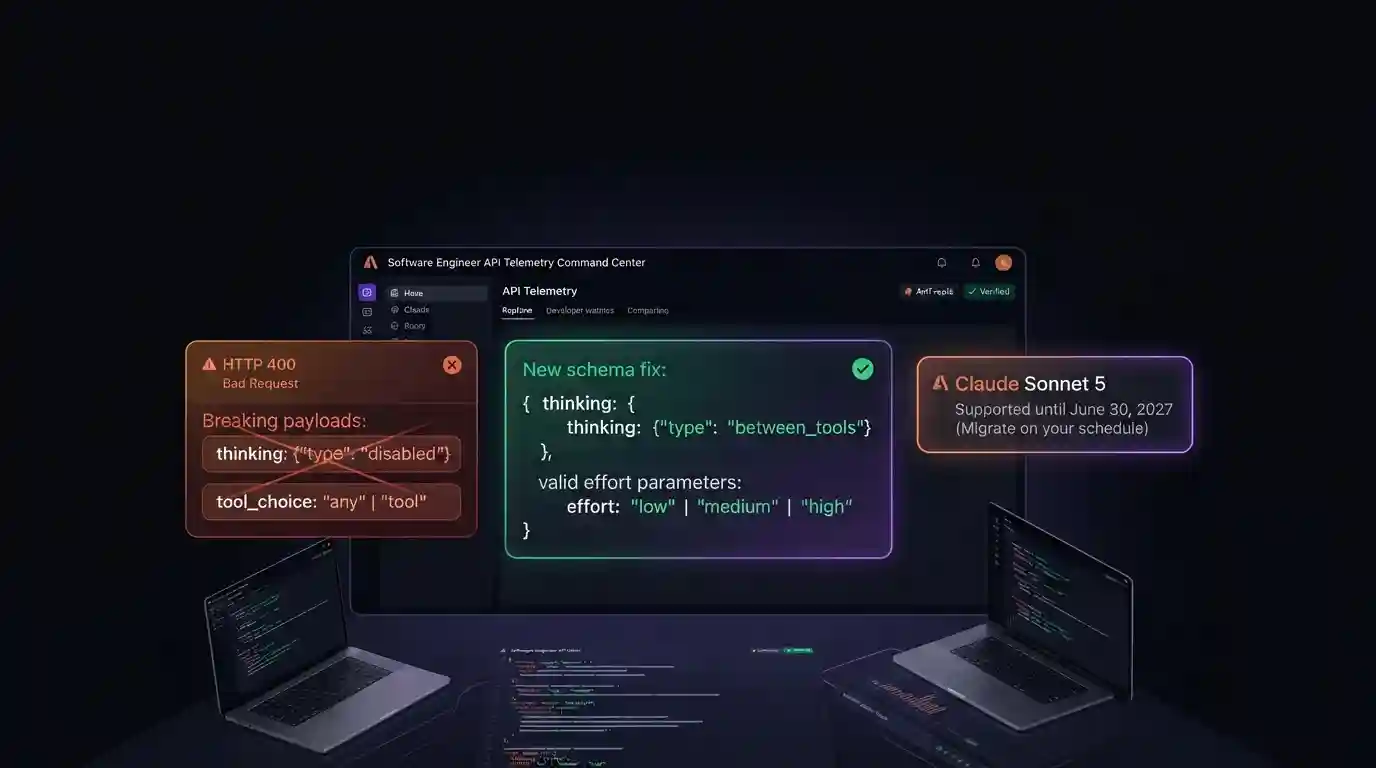
Claude Sonnet 5.5 migration: which changes return a 400
Claude Sonnet 5.5 launched on September 28, 2026 at the same price as Claude Sonnet 5, $2 per million input tokens and $10 per million output tokens. Moving to it is not a model-ID swap. Several
Tue Sep 29 2026 · 6 min read · 2 views
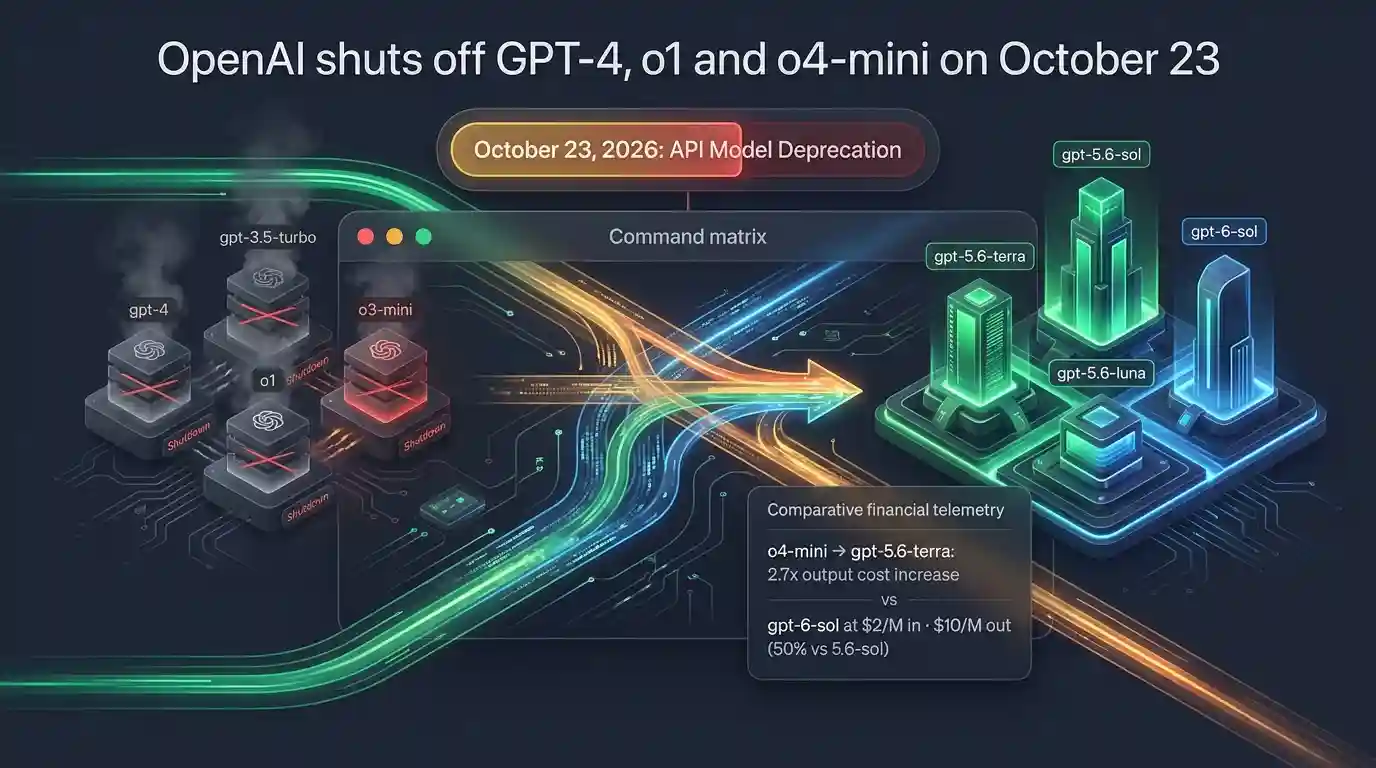
OpenAI shuts off GPT-4, o1 and o4-mini on October 23
OpenAI shuts off GPT-4, GPT-3.5 Turbo, GPT-4 Turbo, o1, o1-pro, o3-mini, o4-mini and several other models on its API on October 23, 2026. That is 24 days away. Any call that names one of those models
Tue Sep 29 2026 · 6 min read · 3 views

AI SDK 7 Changed usage. Your Token Counts Are Now Wrong
If a project upgraded to AI SDK 7 and its per-request token costs suddenly look higher than before, nothing is actually costing more. result.usage used to report only the final step's tokens. In AI
Tue Sep 29 2026 · 6 min read · 0 views