DeepSeek V4 pricing now depends on what time you run it
By Nihar Ranjan Das · Sat Aug 15 2026 · 6 min read · 35 views
View as a Web StoryAI#developer tools#openai#anthropic#llm api#deepseek#ai pricing
DeepSeek V4 pricing now depends on what time you run it
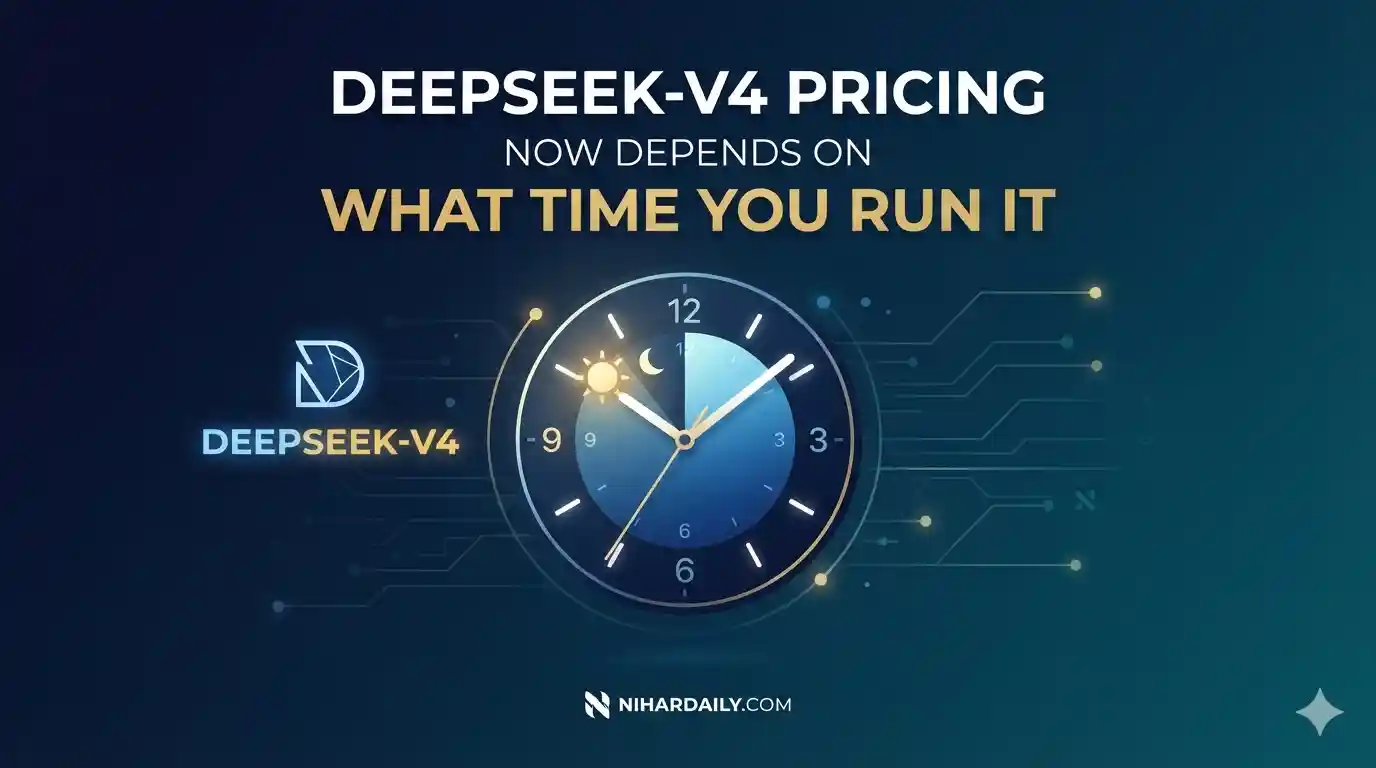
DeepSeek moved its entire API over to peak and off-peak billing at 16:00 UTC on August 16, 2026. Output generated by the flagship V4-Pro model now costs $3.96 per million tokens at peak, and $1.98 the rest of the day, per DeepSeek's own pricing page. The previous promotional rate was a flat $0.87 at any hour of the day.
Every outlet reported the multiple. Almost nobody reported the schedule, and the schedule is what determines your invoice. Peak hours are 01:00-04:00 and 06:00-10:00 UTC. That is seven hours out of every 24. Whether those expensive hours overlap your working day or your sleep depends entirely on your time zone, and the answer separates American teams from European ones.
What changed on August 16, 2026
DeepSeek is a Chinese artificial intelligence lab that sells access to its own large language models through an OpenAI-compatible API. Two models are generally available. V4-Flash is the cheaper option. V4-Pro-0813 is the flagship, and it arrived on August 13, 2026.
Peak pricing is a billing arrangement that charges double for identical work performed during specified hours. Both models adopted it simultaneously at the August cutover. The rates below are in US dollars per million tokens, and they come from the DeepSeek pricing table for both models.
| Model and rate | Cache miss input | Cache hit input | Output |
|---|---|---|---|
| V4-Pro, old flat rate | $0.435 | $0.003625 | $0.87 |
| V4-Pro, off-peak | $0.66 | $0.022 | $1.98 |
| V4-Pro, peak | $1.32 | $0.044 | $3.96 |
| V4-Flash, old flat rate | $0.14 | $0.0028 | $0.28 |
| V4-Flash, off-peak | $0.22 | $0.007 | $0.66 |
| V4-Flash, peak | $0.44 | $0.014 | $1.32 |
DeepSeek attributes the restructuring to infrastructure capacity rather than margin. "To allocate resources more reasonably, we will adopt peak/off-peak pricing," the firm said in the notice quoted by PYMNTS, "encouraging users to schedule their tasks based on actual usage."
Examine the cache hit column carefully, because it contains the largest multiplier in the entire announcement. Cached input is the discounted rate applied to prompt prefixes the provider has already processed and stored. On V4-Pro that rate climbed from $0.003625 to $0.044 at peak. That is a rise of about 1,100%, as InfoWorld set out in its rate card breakdown. Applications that resend a large fixed system prompt on every request absorb that increase disproportionately.
When do DeepSeek's peak hours land where you live?
Peak billing applies during 01:00-04:00 and 06:00-10:00 UTC, and everything outside those windows bills at half price. Converted into local time for August 2026, with daylight saving observed on both sides of the Atlantic, the windows are distributed as follows.
| Region | First peak window | Second peak window |
|---|---|---|
| US Eastern (EDT, UTC-4) | 21:00-00:00 | 02:00-06:00 |
| US Central (CDT, UTC-5) | 20:00-23:00 | 01:00-05:00 |
| US Pacific (PDT, UTC-7) | 18:00-21:00 | 23:00-03:00 |
| United Kingdom (BST, UTC+1) | 02:00-05:00 | 07:00-11:00 |
| Central Europe (CEST, UTC+2) | 03:00-06:00 | 08:00-12:00 |
Consider the European rows first. In Berlin, Paris, Madrid and Amsterdam the second window covers 08:00 until 12:00, which is exactly the working morning. In London it covers 07:00 until 11:00, capturing stand-up, the morning deployment and most interactive development. Nobody in those offices selected that arrangement.
The American rows invert the outcome. Nothing between 06:00 and 21:00 Eastern falls inside a peak window, on the same UTC schedule DeepSeek published. A team in New York, Chicago or Austin therefore pays the discounted rate throughout its business day, with no additional cron entry and no code change.
What the gap costs a real team
Consider a deliberately modest workload, such as 20 million output tokens a month on V4-Pro, the model Quartz reported as generally available across app, web and API on August 13, 2026. That volume represents a few thousand substantial generations, not a hyperscale deployment.
Advertisement
- At the old flat rate of $0.87 per million, that job cost $17.40 a month.
- At the off-peak rate of $1.98 per million, the same job costs $39.60 a month.
- At the peak rate of $3.96 per million, the same tokens cost $79.20 a month.
American teams arrive at the middle number accidentally. European teams arrive at the highest number, equally accidentally. The gap between $39.60 and $79.20 is the practical consequence of this announcement, and it becomes visible only when the UTC schedule is converted into local working hours.
One old rule still holds, and this blog has made the case before: the cheapest AI API is not the cheapest to run. A published per-token rate describes what an individual token costs. Your invoice reflects tokens consumed per task, retry behavior, cached prefix size, and now the position of the clock when your scheduler fires.
How V4-Pro compares with the Western models
DeepSeek remains dramatically cheaper than the American laboratories, even after quadrupling its rates. These are list prices per million tokens, as set out in coverage of the Kimi K3 launch.
| Model | Output price | Input price |
|---|---|---|
| DeepSeek V4-Pro, off-peak | $1.98 | $0.66 |
| DeepSeek V4-Pro, peak | $3.96 | $1.32 |
| Moonshot Kimi K3 | $15 | $3 |
| OpenAI GPT-5.6 Sol | $30 | $5 |
| Anthropic Fable 5 | $50 | $10 |
At its most expensive hour, V4-Pro output remains roughly one eighth the price of GPT-5.6 Sol, and approximately one thirteenth the price of Fable 5. The competitive tier has therefore not changed. What changed is the scheduling arithmetic inside that tier, alongside the disappearance of a promotional rate that made the model appear almost free.
One caveat deserves stating explicitly. Price per token is not price per task. A model that reasons verbosely can emit three times the output tokens of a concise competitor while completing identical work. Benchmark finished tasks against your own workload before migrating production traffic.
Should you reschedule, switch, or ignore this?
The appropriate response depends on where your requests originate and when they execute.
- American teams running jobs during business hours can effectively ignore the peak rate, because their working day sits entirely outside it. Budget instead for the underlying increase from $0.87 to $1.98.
- British and European teams with batch jobs at 09:00 local should reschedule immediately. Moving a nightly report or an embedding refresh to 13:00 UTC or later halves the output cost, without any code change.
- Applications transmitting one large fixed system prompt should examine the cache hit column first, because the steepest increase is located there. Restructuring the prompt may recover more money than rescheduling.
- Interactive traffic from real users cannot be moved, so European peak exposure represents an unavoidable cost. Calculate the split, then evaluate whether V4-Flash at $1.32 peak output can absorb the cheaper half of your requests.
- Teams that selected DeepSeek primarily because it was almost free should repeat the provider comparison. At $1.98 off-peak, the gap to an American alternative is considerably narrower than it was in July.
That final scenario connects to a question worth resolving beforehand: does the free AI API tier train on your data? Pricing is one dimension of provider selection. Data retention is the other dimension, and a retention decision is considerably harder to reverse than a billing decision.
Sources: DeepSeek API pricing docs, InfoWorld on the size of the rise, PYMNTS on the peak-hour rule, Quartz on the V4-Pro launch, The Decoder on rival model prices.
Advertisement
FAQ
What are DeepSeek's peak hours?
DeepSeek's peak hours are 01:00-04:00 and 06:00-10:00 UTC, according to its API pricing documentation. Every remaining hour bills at the off-peak rate, which is exactly half the peak rate. That arrangement leaves 17 of every 24 hours discounted.
How much does DeepSeek V4-Pro cost per million tokens?
DeepSeek V4-Pro costs $1.32 per million input tokens and $3.96 per million output tokens at peak. Off-peak it costs $0.66 for input and $1.98 for output. Cached input costs $0.044 at peak and $0.022 off-peak.
When did the new DeepSeek pricing take effect?
The revised rates took effect at 16:00 UTC on Sunday, August 16, 2026. DeepSeek published them shortly after the V4-Pro-0813 model arrived on August 13, 2026. The previous promotional pricing applied until that cutover.
Is DeepSeek still cheaper than OpenAI and Anthropic?
Yes, substantially. At its peak rate of $3.96 per million output tokens, DeepSeek V4-Pro remains far below OpenAI's GPT-5.6 Sol at $30 and Anthropic's Fable 5 at $50. The gap narrowed considerably, but the ranking did not change.
Can developers avoid peak pricing?
Scheduled workloads can avoid it completely. Batch jobs, evaluation runs, embedding refreshes and nightly reports can execute outside 01:00-04:00 and 06:00-10:00 UTC. Interactive traffic generated by European office hours cannot move, so a portion of that spending remains at peak rates.
Comments
Loading…
Sign in to join the conversation.
Related posts
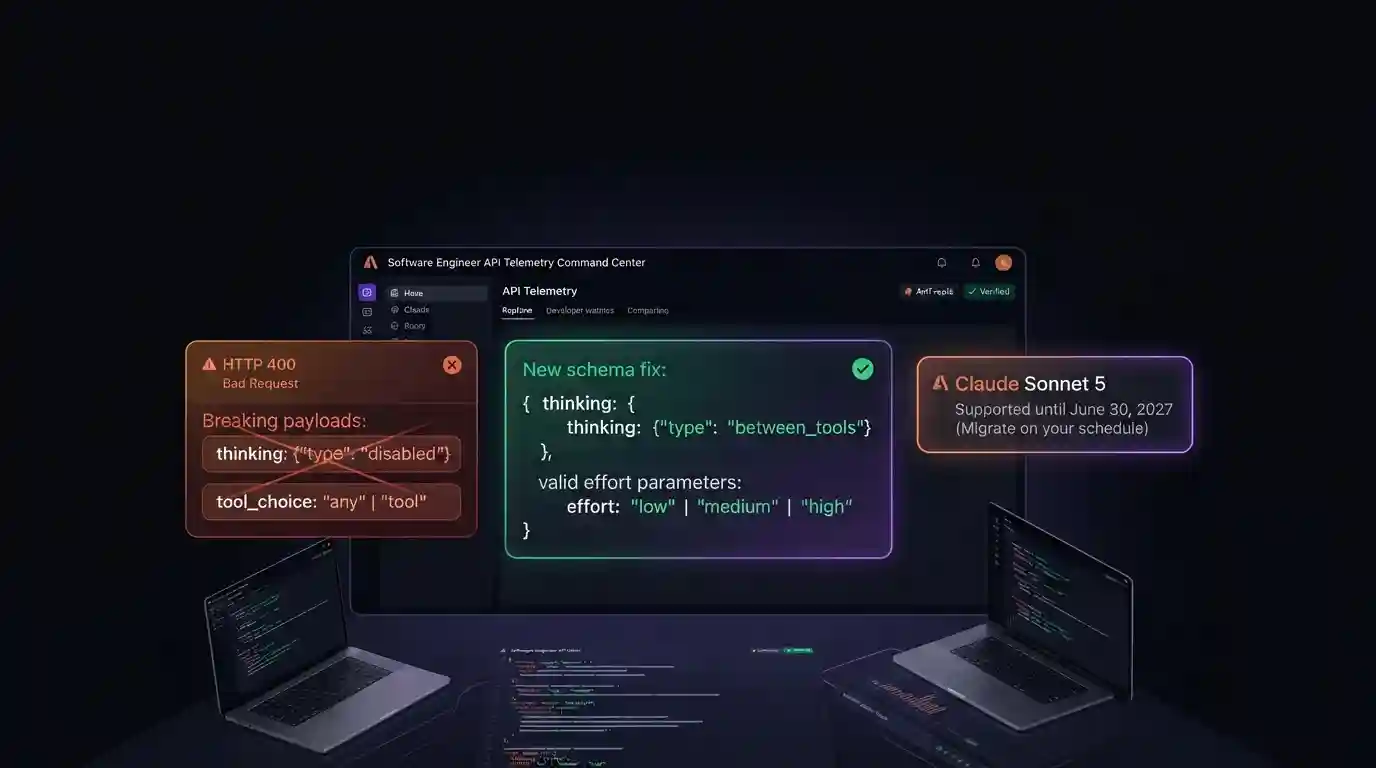
Claude Sonnet 5.5 migration: which changes return a 400
Claude Sonnet 5.5 launched on September 28, 2026 at the same price as Claude Sonnet 5, $2 per million input tokens and $10 per million output tokens. Moving to it is not a model-ID swap. Several
Tue Sep 29 2026 · 6 min read · 1 views
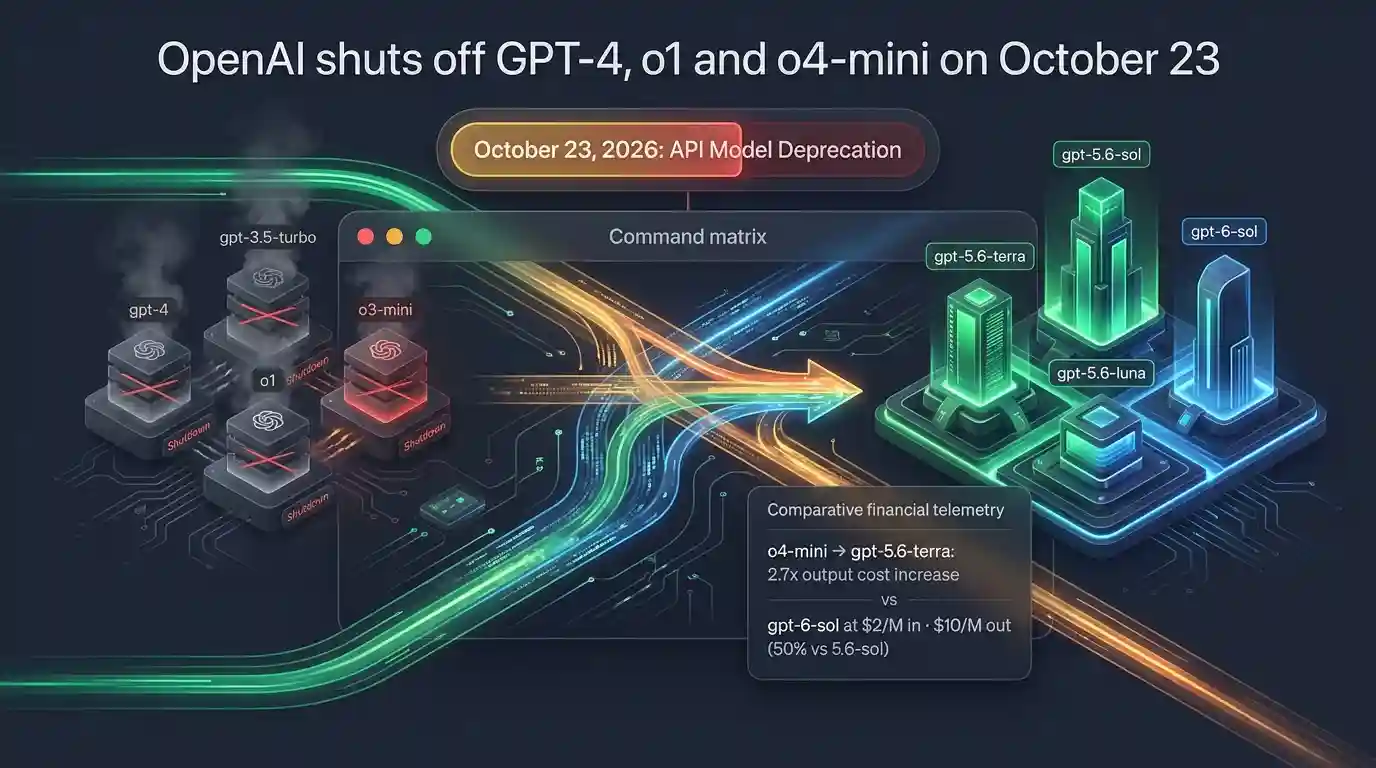
OpenAI shuts off GPT-4, o1 and o4-mini on October 23
OpenAI shuts off GPT-4, GPT-3.5 Turbo, GPT-4 Turbo, o1, o1-pro, o3-mini, o4-mini and several other models on its API on October 23, 2026. That is 24 days away. Any call that names one of those models
Tue Sep 29 2026 · 6 min read · 1 views

AI SDK 7 Changed usage. Your Token Counts Are Now Wrong
If a project upgraded to AI SDK 7 and its per-request token costs suddenly look higher than before, nothing is actually costing more. result.usage used to report only the final step's tokens. In AI
Tue Sep 29 2026 · 6 min read · 0 views