ChatGPT Business Premium: $125 a Seat, Worth It?
By Nihar Ranjan Das · Wed Aug 12 2026 · 5 min read · 13 views
View as a Web StoryAI#ai agents#openai#chatgpt#ai pricing#saas pricing
OpenAI announced Premium seats for ChatGPT Business on August 11, 2026, at $125 per user per month, or $100 per user per month billed annually. A Premium seat carries five times the usage of a Standard seat and is not bound by the five-hour usage limit. Standard seats stay at $25 monthly, or $20 annually. Do the division before you do anything else: five times the usage for five times the price. There is no volume discount in this pricing — and once you see that, the buying decision gets a lot clearer.
That is not a criticism of the plan. It is the fact that determines when a Premium seat is worth buying, and it is missing from every write-up of the announcement.
The pricing, laid out
| Standard | Premium | |
|---|---|---|
| Monthly | $25 / user | $125 / user |
| Annual | $20 / user | $100 / user |
| Usage | Baseline | 5x Standard |
| Five-hour limit | Applies | Does not apply |
Usage resets weekly. Administrators can mix seat types inside one workspace and reassign them between people, so the unit of decision is a person for a billing period, not a permanent tier for the whole company.
The break-even is exactly 1.0, which is the whole point
Five Standard seats cost $125 monthly and carry five units of usage. One Premium seat costs $125 monthly and carries five units of usage. Annually the symmetry holds too: five Standard seats at $20 is $100, and one Premium seat is $100.
So a Premium seat buys you exactly zero extra usage per dollar. What it buys is three things that have nothing to do with volume:
One identity instead of five. Five Standard seats spread across five logins means five sets of chat history, memory, connectors and project files. If the person doing the heavy work is one person, splitting their usage across seats is not a workaround — it is a broken workflow with the context scattered.
No five-hour ceiling. This is the reason the tier exists. A Standard seat's usage is gated by a rolling five-hour limit, so an agentic task that runs long does not just cost more, it stops. A Premium seat removes the wall rather than moving it.
Headroom without a purchase decision every week. Reassignment is cheap; hitting a cap mid-task is not.
If none of those three describe your team, the honest answer is that five Standard seats and one Premium seat are the same purchase, and you should buy the shape that matches your headcount.
When the API is the cheaper answer instead
Per-seat pricing and metered API pricing fail in opposite directions, and the failure mode tells you which to pick.
Advertisement
A seat is a flat fee with a ceiling. You pay $25 or $125 whether the person used the account heavily or opened it twice, and when they run out, they are done until the window resets. That is good for predictable budgets and bad for spiky work.
The API is metered with no ceiling. You pay for tokens consumed, so a quiet week costs almost nothing and a heavy automated workload costs whatever it costs. That is good for bursty and programmatic usage and bad for a finance team that wants one number.
The practical rule: if a human sits in front of the conversation, buy a seat, because you are also buying the app, the connectors, admin controls and workspace data handling that you would otherwise have to build. If a script or an agent is generating the traffic with no human in the loop, meter it — you are paying seat prices for an interface nobody is looking at.
This is also where a lot of teams get the total wrong in the other direction, because a per-token price is not the same as what a workload actually costs to run once you count retries, context re-sends and the tool calls an agent makes on its way to an answer.
Why OpenAI shipped this now
The stated reason is that teams are tackling more complex tasks and need more capacity. The mechanical reason is agentic usage: an agent that plans, calls tools and iterates burns far more tokens per human request than a chat turn does, and a flat seat priced for chat does not survive contact with that pattern. That pattern is becoming the default rather than the exception: Claude Code switched new sessions to auto mode on August 14, where the agent proceeds between steps instead of stopping for approval. What an unattended agent then spends is its own separate problem. Tiering the seat is the alternative to raising the base price for everyone — which, at $25 unchanged, is what OpenAI avoided doing.
There is also a deadline attached. OpenAI is offering workspace credits — reported as $100 in credits per qualifying Premium seat, up to five seats, for a capped number of workspaces that sign up before August 20, 2026. Credits do not change the per-dollar usage math above; they change the cost of finding out. If you were going to test one Premium seat anyway, the deadline is the reason to do it this week rather than next month.
How to decide in one sitting
- Find out who is actually hitting the cap. Not who complains — who stops working. That is the only population Premium is priced for.
- Count their sessions, not their questions. Long agentic runs are the workload the five-hour limit kills.
- Buy one Premium seat, not a tier for the team. Seats are reassignable; move it to whoever is blocked this month.
- Split off anything unattended into the API. If no human reads the output, a seat is the wrong unit.
- Re-check after one billing period. Weekly resets mean a month is enough data to know whether the ceiling or the volume was the real constraint.
The summary: at $125 against $25 for five times the usage, OpenAI is charging a flat rate per unit of capacity and selling you the removal of a ceiling. If the ceiling is what is hurting, it is a fair price. If you just want more total capacity across a team, more Standard seats cost exactly the same and there is no reason to upgrade.
Advertisement
FAQ
How much does a ChatGPT Business Premium seat cost?
$125 per user per month billed monthly, or $100 per user per month billed annually. Standard seats remain $25 monthly or $20 annually, and both seat types can be mixed in one workspace.
Is ChatGPT Business Premium worth it?
It is worth it when a specific person keeps hitting the five-hour usage limit mid-task, because Premium removes that ceiling. It is not worth it purely for more total capacity: five Standard seats cost the same $125 and carry the same five units of usage.
What is the five-hour limit on ChatGPT Business?
Standard seats are subject to a rolling five-hour usage limit, so heavy or long-running work stops until the window resets. Premium seats are not bound by that limit, and usage resets weekly.
Should I use the OpenAI API instead of buying seats?
Use the API when traffic is generated by scripts or agents with no human reading the output, since metered pricing has no ceiling and no per-person fee. Buy seats when a person is using the app, because the seat also covers the interface, connectors and admin controls.
When does the ChatGPT Business Premium credit offer end?
OpenAI's offer of $100 in workspace credits per qualifying Premium seat, up to five seats, is reported as applying to a capped number of workspaces that sign up before August 20, 2026.
Comments
Loading…
Sign in to join the conversation.
Related posts
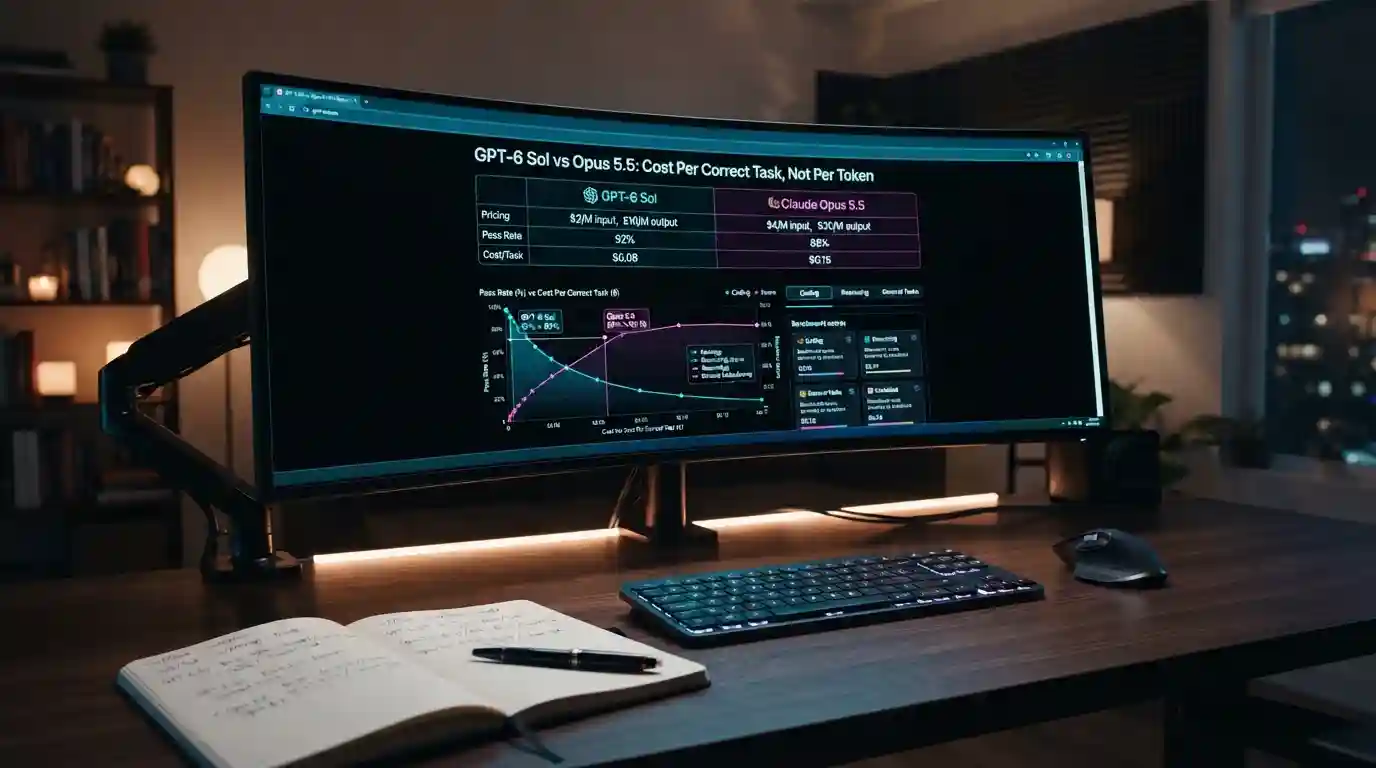
GPT-6 Sol vs Opus 5.5: cost per correct task, not per token
GPT-6 Sol costs exactly half as much per token as Claude Opus 5.5, but that does not make it half the cost of finishing your work. Sol is cheaper per attempt. Opus 5.5 succeeds more often on hard
Fri Sep 25 2026 · 6 min read · 1 views
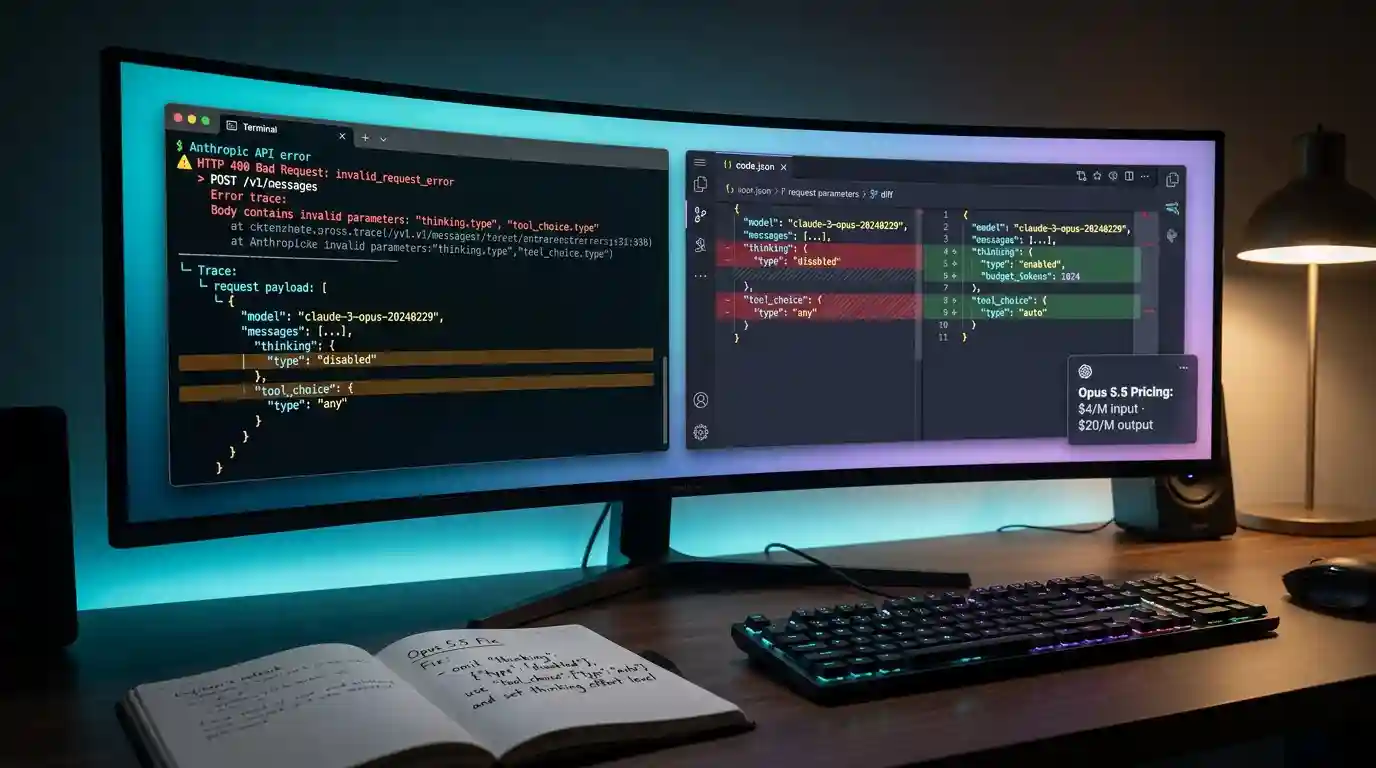
Claude Opus 5.5 returns 400 errors. Here is how to fix it
If your code moves from claude-opus-5 to claude-opus-5-5 and starts returning 400 errors, one of two request fields is the cause. Either thinking is set to disabled, or toolchoice is set to any or
Fri Sep 25 2026 · 8 min read · 1 views

Sora 2's API is gone. What replaces it?
OpenAI removed the Sora 2 Videos API on Sept 24, 2026 with no successor. Compare per-second prices for Veo 3.1, Kling and self-hosted options.
Thu Sep 24 2026 · 5 min read · 4 views